

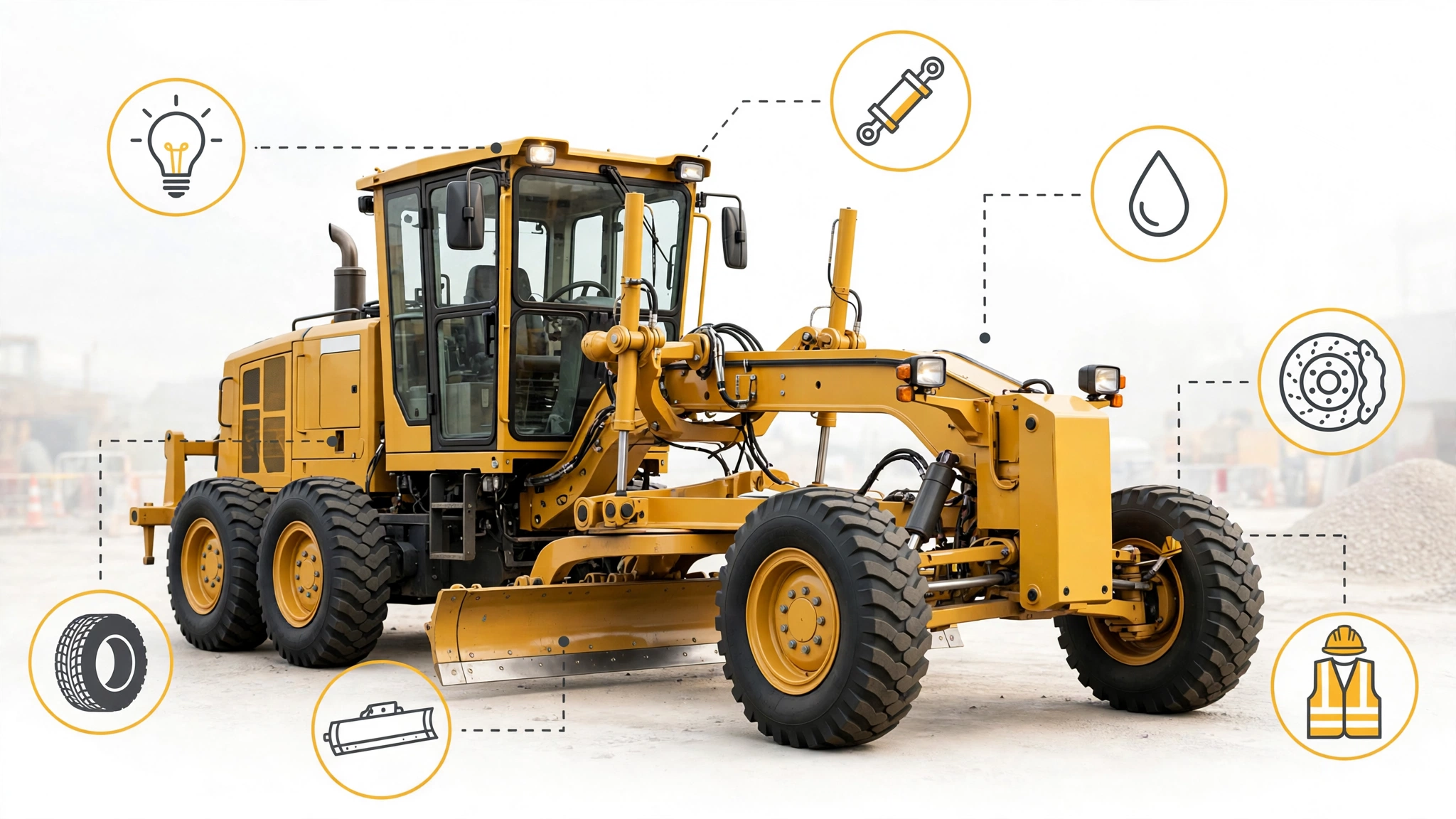
A motor grader daily safety inspection protects the operator. It protects the ground crew. It protects the machine. A missed check causes injuries. A missed check causes 20000 dollar accidents. This post covers 7 essential checks for a thorough machine evaluation. Each step takes minutes. Each step prevents serious problems. Apply this motor grader daily safety inspection routine before every shift. Keep the crew safe. Keep the machine working.
The motor grader daily safety inspection begins before the engine starts. The operator walks around the machine. The operator looks for hazards. The operator checks critical systems. The walk takes 15 minutes. The walk prevents most accidents. Skipping this walk saves 15 minutes. Skipping this walk risks a 20000 dollar injury. The trade is not worth it.
Table of Contents
Walkaround Hazard Check
The first step in the motor grader daily safety inspection is the walkaround. Walk completely around the machine. Look for people in the area. Look for tools on the ground. Look for equipment parked too close. Look for fresh fluid spots under the machine. Oil spots indicate a leak. Coolant spots indicate overheating. Fuel spots indicate a fire risk. Clear the area before starting the engine. The motor grader daily safety inspection starts with a clear zone.
Check the ground under the blade. Stakes and debris hide under the moldboard. These objects fly out during grading. They strike nearby workers. Remove all objects before starting work. This routine procedure removes this flying object hazard.
One site skipped this walkaround. A steel stake sat under the blade. The operator lowered the blade. The stake shot out sideways. The stake hit a worker in the leg. The injury required surgery. The medical cost was 18000 dollars. The motor grader daily safety inspection walkaround would have found the stake. The walkaround takes 2 minutes. The injury cost 18000 dollars. The math is clear.
Fluid Level Check
The second step in the motor grader daily safety inspection is fluid levels. Low engine oil seizes the engine. Low hydraulic oil burns the pump. Low coolant overheats the engine. Low transmission oil destroys the transmission. Low brake fluid causes brake failure. Each failure causes downtime. Each failure costs thousands of dollars. The motor grader daily safety inspection fluid check prevents these failures.
Check the engine oil with the dipstick. Check the hydraulic oil at the sight gauge. Check the coolant at the overflow bottle. Check the transmission with the dipstick. Check the brake fluid reservoir. Top off any low fluids. Record the levels in a log. A sudden drop in any fluid indicates a leak. The routine safety evaluation catches the leak early.
A grader operator skipped the brake fluid check. The brake fluid ran low. The brakes failed on a slope. The machine rolled backward. The machine struck a parked truck. The repair cost 22000 dollars. The motor grader daily safety inspection brake fluid check takes 30 seconds. The check prevents this accident.
Tire and Wheel Check
The third step in the motor grader daily safety inspection is the tire and wheel check. Tires hold the machine on the ground. Tires affect steering and braking. A blown tire causes loss of control. A loose wheel causes a rollover. The daily tire check takes 3 minutes.
Check each tire for cuts and bulges. Check for embedded objects in the tread. Check the tire pressure with a gauge. Low pressure causes tire overheating. Overheating causes blowouts. Check the wheel lug nuts for tightness. Loose lug nuts cause wheel separation. The motor grader daily safety inspection catches these problems before they cause accidents.
A grader had a loose wheel. The operator skipped the wheel check. The wheel separated at full speed. The machine dropped onto the axle. The machine rolled onto its side. The operator suffered back injuries. The medical cost was 35000 dollars. The machine repair cost 40000 dollars. The motor grader daily safety inspection wheel check takes 1 minute per wheel. The check prevents this disaster.
Steering and Brake Test
The fourth step in the motor grader daily safety inspection is the steering and brake test. Start the engine. Turn the steering wheel left and right. The wheels must respond immediately. Slow response indicates low hydraulic pressure. Slow response causes loss of control. The routine steering test catches hydraulic problems.
Press the brake pedal. The pedal must feel firm. A soft pedal indicates air in the brake lines. A soft pedal indicates low brake fluid. Soft brakes cause stopping distance increases. Test the parking brake. The parking brake must hold the machine on a slope. The motor grader daily safety inspection brake test takes 2 minutes.
A grader operator skipped the brake test. The service brakes had air in the lines. The operator worked on a slope. The brakes failed. The machine rolled into an excavation. The machine fell 15 feet. The operator suffered broken bones. The medical cost was 45000 dollars. The motor grader daily safety inspection brake test would have caught the air in the lines. The test takes 2 minutes.
Lights and Alarm Check
The fifth step in the motor grader daily safety inspection is the lights and alarm check. Lights help the operator see. Lights help others see the machine. A broken light causes collisions. A broken backup alarm causes struck by accidents. The light check takes 2 minutes.
Turn on the headlights. Walk to the front of the machine. Check both lights. Turn on the tail lights. Walk to the rear. Check both lights. Turn on the beacon light. Check the rotation. Test the backup alarm. The alarm must sound when the machine reverses. Test the horn. The horn warns workers of danger. The motor grader daily safety inspection light check prevents struck by accidents.
A grader worked near a highway at night. The tail lights failed. A truck driver did not see the grader. The truck struck the grader from behind. The repair cost 15000 dollars. The truck driver suffered whiplash. The medical cost was 8000 dollars. The motor grader daily safety inspection light check would have found the failed tail lights.
Blade and Moldboard Check
The sixth step in the motor grader daily safety inspection is the blade and moldboard check. The blade cuts material. The blade bolts hold the cutting edge. Loose bolts cause the edge to fly off. A flying edge strikes workers. A flying edge damages property. The blade check takes 3 minutes.
Check the cutting edge bolts. Tighten any loose bolts. Replace any missing bolts. Check the moldboard for cracks. Cracks grow under load. A cracked moldboard breaks apart. The pieces strike the machine and the operator. Check the circle and drawbar connections. Loose connections cause blade drop. The motor grader daily safety inspection blade check prevents these failures.
A grader had a loose cutting edge bolt. The operator skipped the blade check. The bolt fell out. The cutting edge shifted. The edge struck a rock. The edge flew off the moldboard. The edge hit a worker in the chest. The worker suffered internal injuries. The medical cost was 28000 dollars. The motor grader daily safety inspection blade check takes 3 minutes.
Fire Extinguisher and First Aid Check
The seventh step in the motor grader daily safety inspection is the fire extinguisher and first aid check. Fires start in hydraulic systems. Fires start in electrical systems. A working extinguisher stops small fires. A missing extinguisher allows small fires to grow. The extinguisher check takes 1 minute.
Check the fire extinguisher gauge. The needle must sit in the green zone. Check the mounting bracket. The extinguisher must stay secure. Check the first aid kit. The kit must have bandages, gauze, and antiseptic. Check the kit for expired items. Replace expired items immediately. The motor grader daily safety inspection safety equipment check prepares the operator for emergencies.
A grader had a hydraulic hose failure. Hot oil sprayed on the exhaust manifold. The oil ignited. The operator grabbed the fire extinguisher. The extinguisher was empty. The operator used a shovel to throw dirt on the fire. The fire spread to the wiring harness. The repair cost 12000 dollars. The motor grader daily safety inspection extinguisher check would have found the empty extinguisher.
Daily Routine Application
Now let us apply this routine to daily operations. Start the inspection before the engine starts. Walk the machine. Check the fluids. Check the tires. Check the steering and brakes. Check the lights. Check the blade. Check the safety equipment. The full inspection takes 15 minutes.
Record the results in a log. Note any problems found. Note any repairs made. Note any parts ordered. Review the log weekly. Look for repeated problems. Repeated problems indicate a deeper issue. Address the deeper issue before it causes an accident. The motor grader daily safety inspection log becomes a maintenance history.
Impact of the Inspection Routine
Train every operator on this motor grader daily safety inspection. New operators learn the routine before running the machine. Experienced operators refresh the routine annually. Supervisors audit the routine monthly. The routine becomes a habit. The habit prevents accidents.
A fleet of 10 graders implemented this exact procedure. Accidents dropped from 6 per year to zero. Insurance claims dropped from 120,000 dollars to zero. The insurance premium dropped by 20 percent. The fleet saved 24,000 dollars per year on premiums alone. This proactive routine paid for itself many times over.
Conclusion
The motor grader daily safety inspection protects the most valuable asset. The operator. A 20000 dollar injury changes lives. The injury causes pain. The injury causes lost work. The injury causes family stress. The motor grader daily safety inspection prevents these injuries. The 15 minute routine is the best investment in safety.
Your motor grader daily safety inspection is not optional. It is required. It is required by common sense. It is required by law in many jurisdictions. It is required by the families who depend on the operator. Start the routine today. Keep it every day. The crew stays safe. The machine stays working. The project stays on schedule.
Now go inspect your motor grader. Walk around the machine. Check the fluids. Check the tires. Test the steering and brakes. Test the lights and alarms. Check the blade. Check the safety equipment. Complete the motor grader daily safety inspection before every shift. The 15 minutes you spend protects everything.