
Motor Grader Fuel Efficiency 2026 starts with a painful question. How much diesel burned yesterday? How much last week? How much last month? The numbers shock most owners. Thousands of gallons. Tens of thousands of dollars. Money disappearing into the tank. Money that could stay in the pocket.
Motor Grader Fuel Efficiency 2026 reveals the truth. Most graders operate at fifty to sixty percent fuel efficiency. Wasted fuel. Wasted money. Wasted environmental impact. The machine works harder than necessary. The engine drinks more than required. The budget suffers.
Here is the reality. Simple fixes exist. Cheap fixes. Quick fixes. No major overhauls required. No expensive upgrades necessary. Just practical adjustments that any mechanic or operator can implement immediately. Six fixes slash operating costs dramatically. Proven techniques. Field-tested results. Every single one saves money from the first day.
Table of Contents
Proper Tire Inflation and Matching
Tires touch the ground. Ground creates rolling resistance. Rolling resistance demands engine power. Engine power consumes fuel. Underinflated tires increase rolling resistance. More resistance means more power. More power means more fuel. Simple physics. Tire pressure twenty percent below specification increases fuel consumption by five percent. Five percent extra fuel every single day. Every single week. Every single year.
Motor Grader Fuel Efficiency 2026 demands proper tire pressure. Check daily. Cold pressure readings only. Adjust to manufacturer specifications. Front tires differ from rear tires. Load ratings differ. Pressure requirements differ. Matching tires matters equally. Mismatched sizes create uneven rolling resistance. Uneven resistance forces the machine to compensate. Compensation burns extra fuel.
Motor Grader Fuel Efficiency 2026 includes tire pressure logs. Record readings every shift. Track trends over time. Identify slow leaks early. Repair before pressure drops. Maintain consistent efficiency. One fleet documented fuel savings of eight percent after implementing daily pressure checks. Eight percent on a million-dollar annual fuel bill. Eighty thousand dollars saved. From tire pressure alone.
Aggressive Grade Control and Blade Angle
Blade angle determines cutting efficiency. Aggressive angles force the engine to work harder. Harder work means higher RPM. Higher RPM means more fuel. Operators love aggressive angles. They think steep cuts finish faster. Wrong thinking. Steep angles create drag. Drag creates resistance. Resistance demands power. Power burns diesel.
Motor Grader Fuel Efficiency 2026 requires proper blade angle for every material. Loose gravel needs forty degrees. Compacted clay needs thirty degrees. Hard base needs fifty degrees. One angle does not fit all. Automatic grade control systems reduce fuel consumption. Laser guidance. GPS positioning. Slope sensors. These technologies eliminate overcutting. Eliminate rework. Eliminate wasted passes. Fewer passes mean less fuel.
Motor Grader Fuel Efficiency 2026 encourages technology investment. The upfront cost pays back quickly. Fuel savings alone justify the purchase. Rework savings add more. Operator fatigue reduction adds more. Some fleets report fuel reductions of twelve percent after installing automatic grade control. Twelve percent savings on annual fuel expenses. Significant money. Return on investment within eighteen months.
Reduced Engine Idle Time
Idling burns fuel. Zero production. Zero progress. Zero benefit. Operators idle engines during breaks. During lunch. During waiting periods. During conversations. During phone calls. Ten minutes here. Fifteen minutes there. Adds up to hours per shift. Hours of wasted fuel.
Motor Grader Fuel Efficiency 2026 attacks idle time aggressively. Shut down the engine during extended stops. Restart when ready to work. Modern engines handle frequent starting without damage. No excuse for prolonged idling. Automatic engine shutdown systems help. Program the machine to shut down after five minutes of idle. Restart with a button push. Simple. Effective. Fuel saving.
Training operators matters. Explain the cost of idling. Show fuel consumption numbers during idle. Show the annual cost. Idling one hour per shift burns thousands of dollars annually. Motor Grader Fuel Efficiency 2026 includes idle tracking. Hour meters record idle time separately from working time. Review idle logs weekly. Identify excessive idling patterns. Correct operator behavior. One fleet reduced idle time by sixty percent after implementing tracking and training. Fuel savings exceeded ten percent.
Optimal Gear Selection and Ground Speed
Gear selection affects engine efficiency. Operating in the wrong gear increases fuel consumption. Low gear at high RPM burns fuel. High gear at low RPM strains the engine. Motor Grader Fuel Efficiency 2026 requires proper gear selection for each application. Loading heavy material demands lower gears. Finishing passes allow higher gears. Speed matches the task. Efficiency follows.
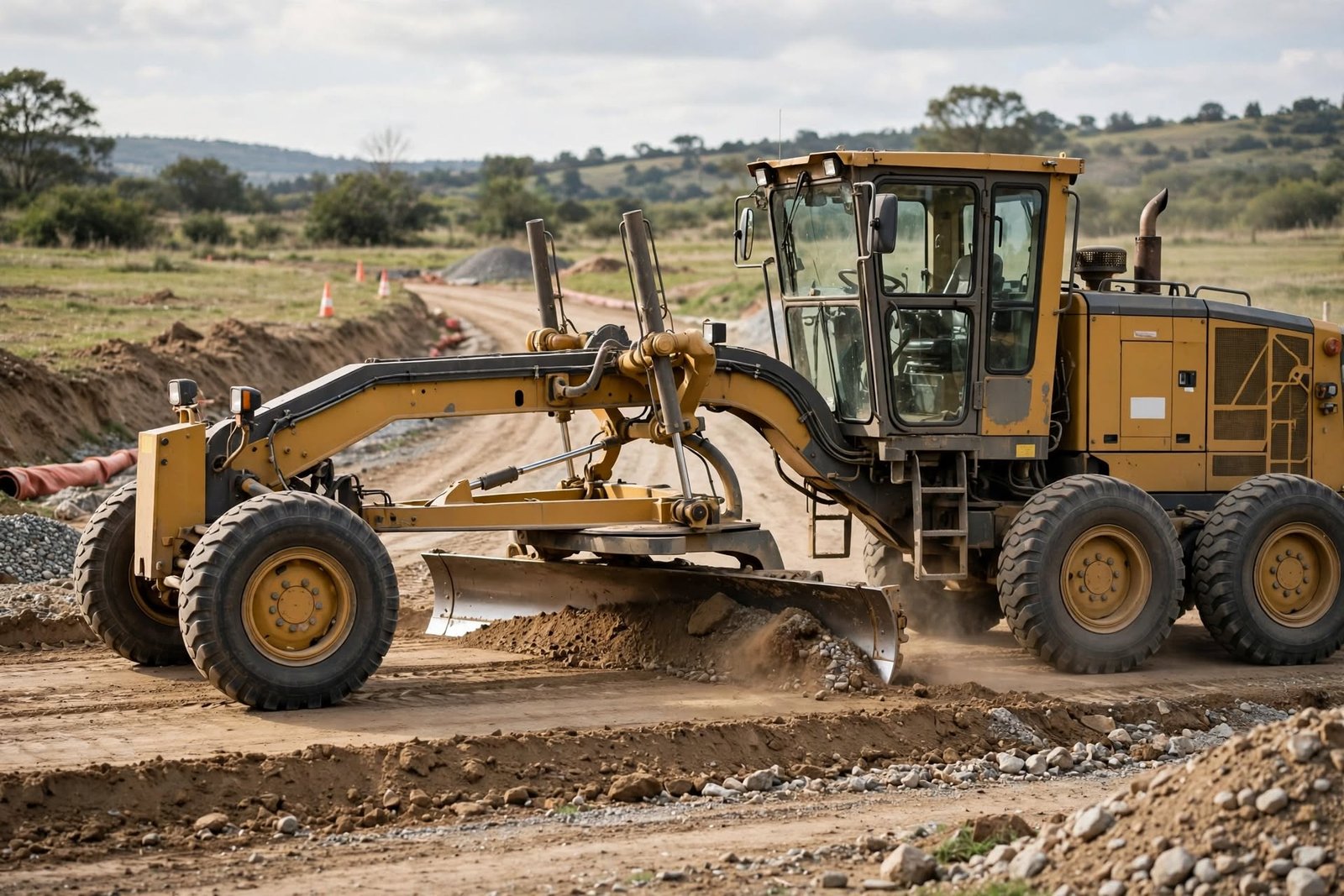
Ground speed impacts fuel consumption equally. Faster speeds require more power. More power burns more fuel. Slower speeds reduce efficiency through extended operating time. Balance required. The ideal operating range keeps engine RPM between 1800 and 2200. Below 1800 strains the engine. Above 2200 burns unnecessary fuel. Stay in the sweet spot.
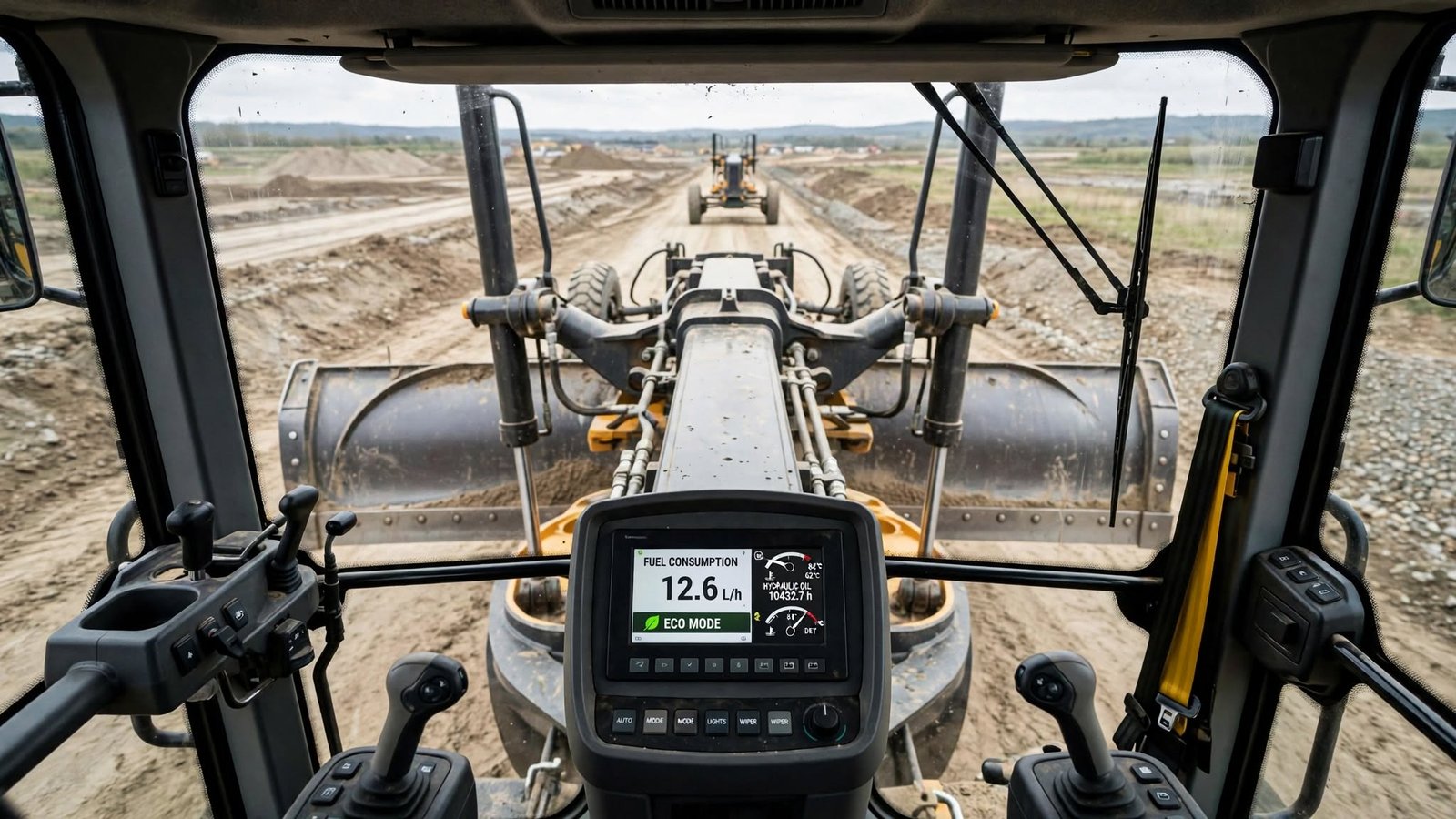
Motor Grader Fuel Efficiency 2026 recommends tachometer monitoring. Operators watch the gauge. Adjust gear selection. Maintain optimum RPM. Simple discipline. Significant savings. Modern graders feature economy modes. The engine management system adjusts power output. Reduces fuel consumption during light loads. Engages full power only when needed. Use economy mode whenever possible.
Regular Air Filter and Fuel System Maintenance
Dirty air filters restrict airflow. Restricted airflow reduces combustion efficiency. Inefficient combustion burns more fuel. Engines work harder to achieve the same power. Motor Grader Fuel Efficiency 2026 demands clean air filters. Replace filters at recommended intervals. More frequently in dusty conditions. A clogged filter increases fuel consumption by up to ten percent. Ten percent waste. Unacceptable.
Fuel system cleanliness matters equally. Dirty injectors spray unevenly. Uneven spray creates incomplete combustion. Incomplete combustion wastes fuel. Wastes power. Creates emissions. Fuel filter replacement prevents contamination. Clean fuel keeps injectors working properly. Properly functioning injectors maximize efficiency. Efficiency saves money.
Motor Grader Fuel Efficiency 2026 includes fuel additive recommendations. Cetane boosters improve combustion. Injector cleaners remove deposits. Both increase efficiency. Both reduce fuel consumption. One fleet performed quarterly fuel system maintenance. Injector cleaning. Filter replacement. System inspection. Fuel consumption dropped six percent. Simple maintenance. Real savings.
Proper Ballasting and Weight Distribution
Weight affects fuel consumption. Heavier machines burn more fuel. Simple physics. Grader weight needs match the application. Too much weight wastes fuel. Too little weight reduces traction. Motor Grader Fuel Efficiency 2026 requires proper ballasting. Add weight only when needed. Remove weight when not needed. Each thousand pounds of unnecessary weight increases fuel consumption by three percent.
Weight distribution matters equally. Front heavy machines push instead of cut. Pushing increases rolling resistance. Rolling resistance burns fuel. Rear heavy machines lose traction. Reduced traction requires more power. More power burns more fuel. Proper ballast placement ensures balanced machine operation.
Motor Grader Fuel Efficiency 2026 recommends annual weight audits. Weigh the machine. Compare to manufacturer specifications. Remove unnecessary ballast. Add required ballast. Optimize fuel consumption. Some fleets save five percent annual fuel costs through proper ballasting. No equipment purchase required.
The Combined Impact of All Six Fixes
Apply all six fixes together. The results multiply. Tire pressure optimization. Aggressive grade control. Reduced idle time. Optimal gear selection. Regular maintenance. Proper ballasting.
Motor Grader Fuel Efficiency 2026 delivers total savings of twenty-five to thirty-five percent. On a $100,000 annual fuel bill, that means $25,000 to $35,000 saved. Every year. Consistently.
These fixes cost almost nothing to implement. Tire pressure checks take minutes. Blade angle adjustments take seconds. Idle reduction requires operator discipline. Gear selection requires awareness. Maintenance requires scheduled intervals. Ballasting requires initial effort.
Return on investment appears immediately. First month. First quarter. First year. Fuel savings pay for any minor expenses. The rest goes straight to the bottom line.
This guide changes operations dramatically. Lower operating costs. Higher profitability. Reduced environmental impact. Improved equipment longevity. Better operator satisfaction.
Operator Training for Fuel Efficiency
Operators play the biggest role in fuel efficiency. Their habits determine fuel consumption. Their decisions affect costs daily. Motor Grader Fuel Efficiency 2026 includes operator training. Half-day sessions covering these six fixes. Practical exercises. Real demonstrations. Performance feedback.
Training pays back quickly. Operators who understand fuel consumption costs make better decisions. They adjust techniques. They conserve fuel. They save money. One company trained twenty operators in fuel-efficient techniques. Average fuel savings across the fleet reached eighteen percent. Motor Grader Fuel Efficiency 2026 makes training mandatory. No exceptions. Every operator participates.
Fuel Monitoring Systems
Technology helps track fuel consumption. Fuel flow meters measure usage. Telematics systems report consumption data. Dashboard displays show real-time efficiency. Motor Grader Fuel Efficiency 2026 recommends fuel monitoring. Install meters on every machine. Track consumption per shift. Per operator. Per application.
Data reveals patterns. High consumption operators identified. Inefficient techniques exposed. Corrective training applied. Consumption reduces. Motor Grader Fuel Efficiency 2026 leverages monitoring data for continuous improvement. Monthly reviews identify trends. Quarterly targets drive performance.
Conclusion
Six simple fixes slash operating costs dramatically. Tire pressure optimization. Aggressive grade control reduction. Idle time elimination. Optimal gear selection. Regular maintenance. Proper ballasting. Motor Grader Fuel Efficiency 2026 delivers substantial savings. Twenty-five to thirty-five percent fuel reduction. Thousands of dollars saved annually. Simple implementation. Immediate results.
These fixes require no major investment. No expensive equipment. No complicated procedures. Just disciplined application of basic principles. Motor Grader Fuel Efficiency 2026 belongs in every fleet. Every operator. Every maintenance program. Essential for profitability. Essential for competitiveness.
The fuel bill does not have to hurt. Apply these fixes. Watch the savings grow. Watch the budget improve. Watch the machine perform better. Motor Grader Fuel Efficiency 2026 changes everything. Lower costs. Higher profits. Better machines. Satisfied owners.
Start today. Check tire pressure. Adjust blade angle. Reduce idle time. Select optimal gear. Clean air filters. Verify ballasting. The savings start immediately. The benefits continue forever. This guide proves that small changes create big results.