
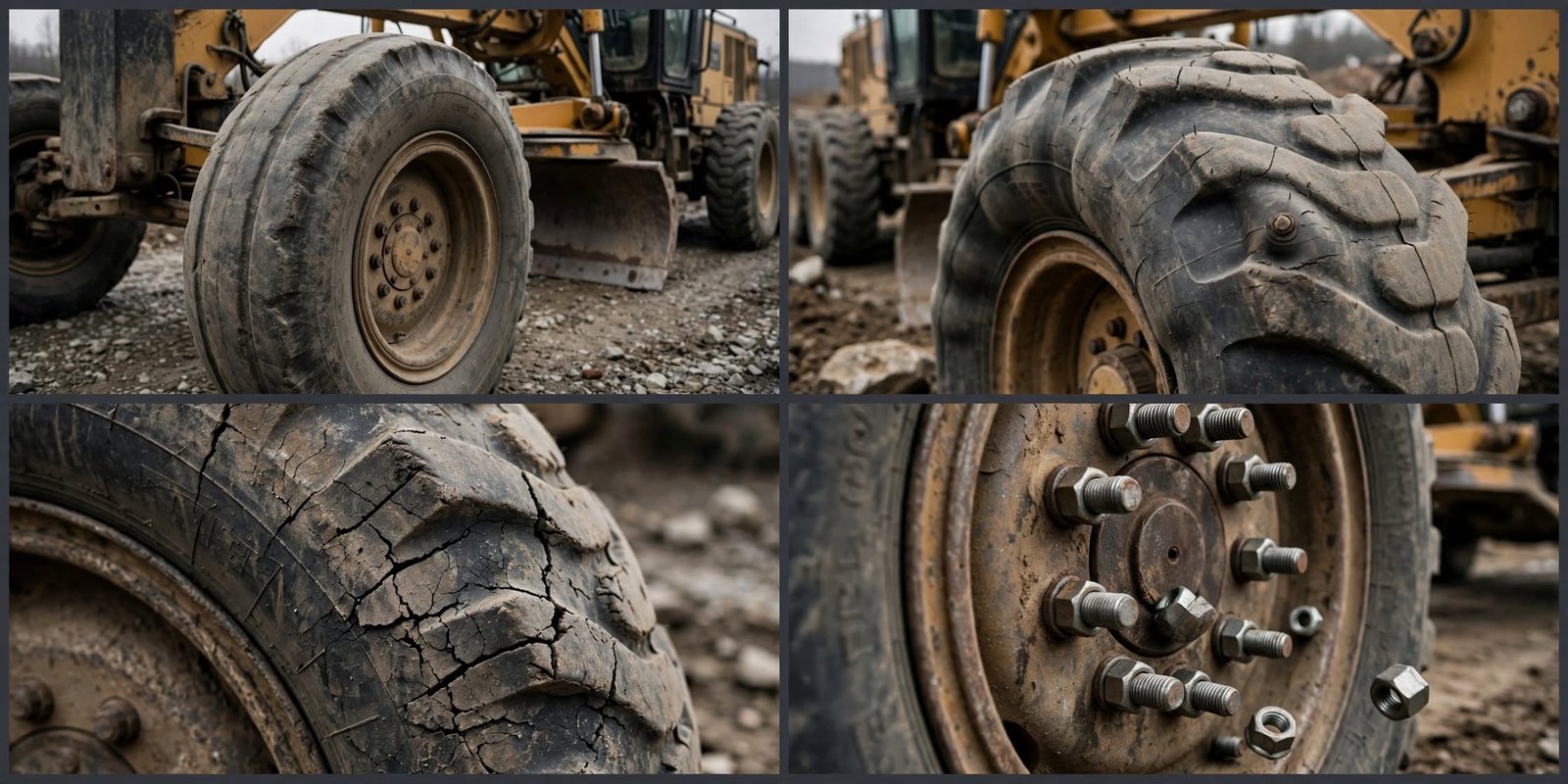
Motor Grader Tire Safety starts with a question. When was the last tire inspection performed? Not a glance. Not a kick. A real inspection. Hands on the rubber. Eyes on the sidewalls. Air pressure gauge in hand. Motor Grader Tire Safety matters because tires kill people. Not machines. Not budgets. People. Tire explosions send steel cord and rubber fragments flying at deadly speeds. One mistake. One overlooked crack. One underinflated tire. Lives change forever.
Here is the frightening reality. Most owners ignore tire safety completely. They focus on blades. They focus on engines. They focus on hydraulics. Tires receive minimal attention. Minimal maintenance. Minimal respect. Four deadly mistakes happen daily on every job site. In every fleet. Owners know better. Yet they continue making these errors. This guide exposes every single one. No sugarcoating. No corporate speak. Just brutal facts about Motor Grader Tire Safety.
Table of Contents
Running Incorrect Air Pressure
Tire pressure matters. More than most realize. Underinflation generates heat. Excessive heat breaks down rubber compounds. Sidewalls flex beyond design limits. Flexing creates cracks. Cracks propagate through steel belts. Belts separate from rubber. Separation leads to catastrophic failure.
Overinflation causes different problems. Tires become rigid. Impact resistance decreases. Rocks and curbs puncture the tread. Punctures become blowouts. Blowouts at speed create dangerous situations. Proper Motor Grader Tire Safety demands daily pressure checks. Not weekly. Not monthly. Daily. Every morning. Before the machine moves.
Most operators never check pressure. They assume the tire shop handled it. They assume the previous shift checked. Assumptions kill. One fleet documented tire failures over twelve months. Eighty percent of failures traced to incorrect pressure. Eighty percent preventable. Motor Grader Tire Safety requires proper pressure charts. Manufacturer specifications vary by tire size.
A simple pressure gauge costs twenty dollars. A tire blowout costs thousands. Replacing damaged rims costs more. Hospital bills cost the most. The math makes no sense. Yet fleets continue ignoring pressure.
Operating with Damaged Sidewalls
Sidewall damage appears in various forms. Cuts from sharp rocks. Scrapes from curbs. Cracks from ozone exposure. Bulges from impact damage. All indicate compromised structural integrity. Sidewalls carry the tire’s load. Steel cords embedded in rubber provide strength. When cords break, the sidewall weakens.
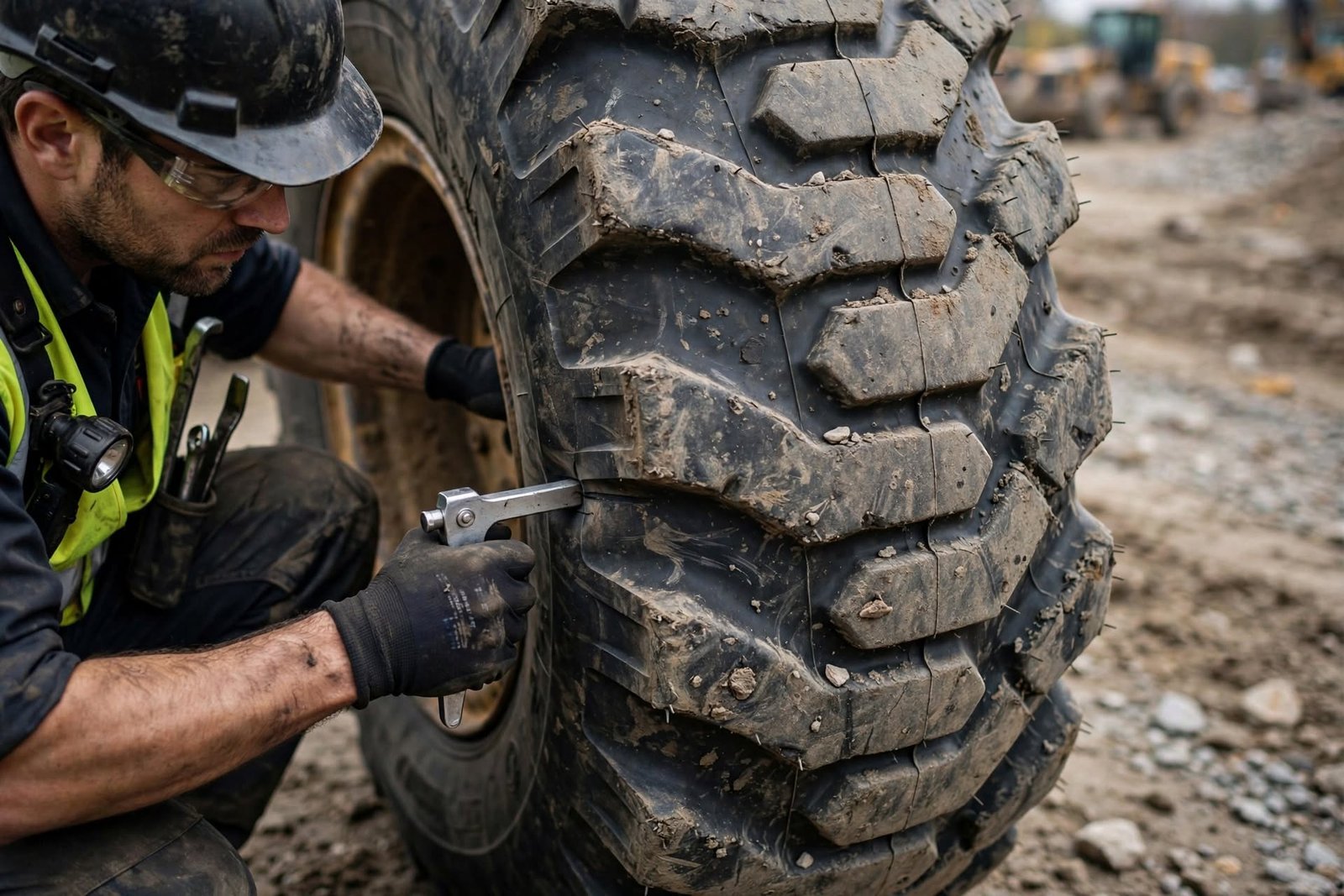
Strict Motor Grader Tire Safety demands immediate removal of damaged tires. No exceptions. No second chances. The tire comes off the machine before another shift begins. Visual inspections catch sidewall damage early. Walk around each tire. Look for cuts deeper than one-quarter inch. Feel for bulges protruding from the surface.
Some fleets repair minor sidewall damage. Specialized repair procedures exist. Heat curing. Section replacement. But repairs never restore full strength. Damaged sidewalls remain weakened permanently. Replacement remains the only safe option.
Comprehensive Motor Grader Tire Safety includes sidewall inspection training. Operators learn what damage looks like. What damage feels like. What damage means. Trained operators catch problems early. Early detection prevents catastrophic failure.
Ignoring Tread Wear Patterns
Tread wear tells stories. Uneven wear indicates alignment problems. Center wear suggests overinflation. Edge wear indicates underinflation. Cupping or scalloping signals suspension issues. Flat spots from locked brakes or sliding. Operators ignore these stories. They see tread depth remaining. They think the tire has life left.
Effective Motor Grader Tire Safety requires tread wear monitoring. Not casual observation. Systematic measurement. Tread depth gauges measure remaining rubber. Wear pattern analysis identifies mechanical issues. Front tire wear differs from rear tire wear. Grader front tires carry more load.
Rotating tires extends tread life. Front to rear. Left to right. Even wear across all positions. But rotation requires knowing current wear patterns. Guessing doesn’t work. Measurement does.
Consistent Motor Grader Tire Safety includes weekly tread depth logging. Records show wear progression. Predict remaining life. Schedule replacement before tread becomes dangerously thin. Thin tread increases puncture risk. Puncture risk creates blowout danger.
Using Mismatched or Recapped Tires
Tire mismatches create instability. Different sizes. Different tread designs. Different load ratings. Different speeds. The machine handles differently. Unevenly. Dangerously. Motor Grader Tire Safety demands matching tires on all positions. Same size. Same ply rating. Same tread pattern. Same age.
Recapped tires present additional concerns. Recaps involve removing worn tread. Applying new rubber. Curing the assembly. The process works for highway trucks. Less effective for graders. Grader tires experience extreme conditions. Sharp rocks cut through new tread.
Standard Motor Grader Tire Safety recommends new tires for grader applications. Cost difference between new and recap might seem substantial. But recaps fail earlier. Require more frequent replacement. Create more downtime. Cost more over the tire’s life.
Motor Grader Tire Safety advises caution with recaps. Evaluate the recapping facility’s reputation. Request test data. Verify quality control procedures. Accept only certified recaps from reputable sources. Reject cheap recaps from unknown suppliers.
The Real Consequences of Neglect
Tire failures cause damage beyond the tire itself. Blowout at speed. Tire fragments fly outward. Hit nearby equipment. Hit nearby personnel. Flying steel cord acts like shrapnel. Injuries severe. Sometimes fatal. Blown tire causes machine instability.
Loss of control follows. Grader veers off the road. Rolls over. Operator trapped. Crush injuries. Long-term disability. Shrapnel damages hydraulic lines. High-pressure fluid sprays. Burns skin. Causes infection. Serious medical treatment required. Damaged rims require replacement.
Proactive Motor Grader Tire Safety prevents all these consequences. Simple inspections. Consistent pressure checks. Immediate replacement of damaged tires. Proper tread monitoring. Matching tires correctly.
Impact & Training Results
One construction company suffered three blowouts in six months. One injury. Substantial damage to two machines. They implemented a strict Motor Grader Tire Safety program. Trained all operators. Conducted daily inspections. Replaced damaged tires immediately. Zero blowouts in the following two years.
Operators need training. Basic tire safety knowledge. How to inspect. How to measure pressure. How to identify damage. Motor Grader Tire Safety training takes one hour. Classroom session. Field demonstration. Practical assessment. Low cost. High return.
Practical Daily Tire Safety Routine
Create a simple daily routine. Execute it every shift. Morning pre-start: Walk around the machine. Check all four tire positions. Look for cuts. Look for bulges. Look for embedded objects. Look for sidewall cracks.
Check air pressure: Use a calibrated gauge. Take cold readings. Compare to manufacturer specifications. Adjust pressure accordingly. Check tread depth: Use a tread depth gauge. Measure at three points across each tire.
Check valve stems: Look for damage. Look for leaks. Look for missing valve caps. Check wheels and rims: Look for cracks. Look for loose lug nuts. Fundamental Motor Grader Tire Safety includes this routine. Fifteen minutes per machine. Prevents catastrophic failure. Saves lives. Saves money.
Seasonal Considerations
Temperature affects tire safety. Summer heat increases tire temperatures. Road surface temperatures exceed ambient by fifty degrees. Tire temperatures rise accordingly. Pressure increases with temperature. Adjust cold pressures lower to compensate for heat expansion.
Advanced Motor Grader Tire Safety requires seasonal adjustments. Manufacturer pressure charts show temperature compensation factors. Apply them daily. Pressure set at 100 psi during summer means 90 psi during winter. Significant difference. Snow and ice conditions demand additional attention.
Conclusion
Four deadly mistakes destroy tires and endanger lives. Incorrect pressure causes heat-related failures. Damaged sidewalls indicate structural compromise. Ignored tread wear masks mechanical problems. Mismatched or recapped tires create instability.
Complete Motor Grader Tire Safety addresses every mistake. Daily pressure checks prevent heat buildup. Sidewall inspections catch damage early. Tread monitoring identifies mechanical issues. Matching tires maintains stability. New tires provide reliability. The cost of tire safety programs remains minimal. The cost of ignoring tire safety remains catastrophic.
Motor Grader Tire Safety requires commitment. Daily routines. Proper training. Consistent application. No shortcuts. No exceptions. Motor Grader Tire Safety protects operators. Protects nearby workers. Protects equipment. Protects budgets. Motor Grader Tire Safety belongs in every fleet’s maintenance program. Essential. Non-negotiable. Life-saving.
The tires hold the machine. The machine holds the operator. The operator’s life depends on those tires. Treat them with respect. Inspect them daily. Replace them when needed. Drive safely. Return home safely. That is the ultimate goal of true Motor Grader Tire Safety. Every tire. Every shift. Every day.
One Comment