
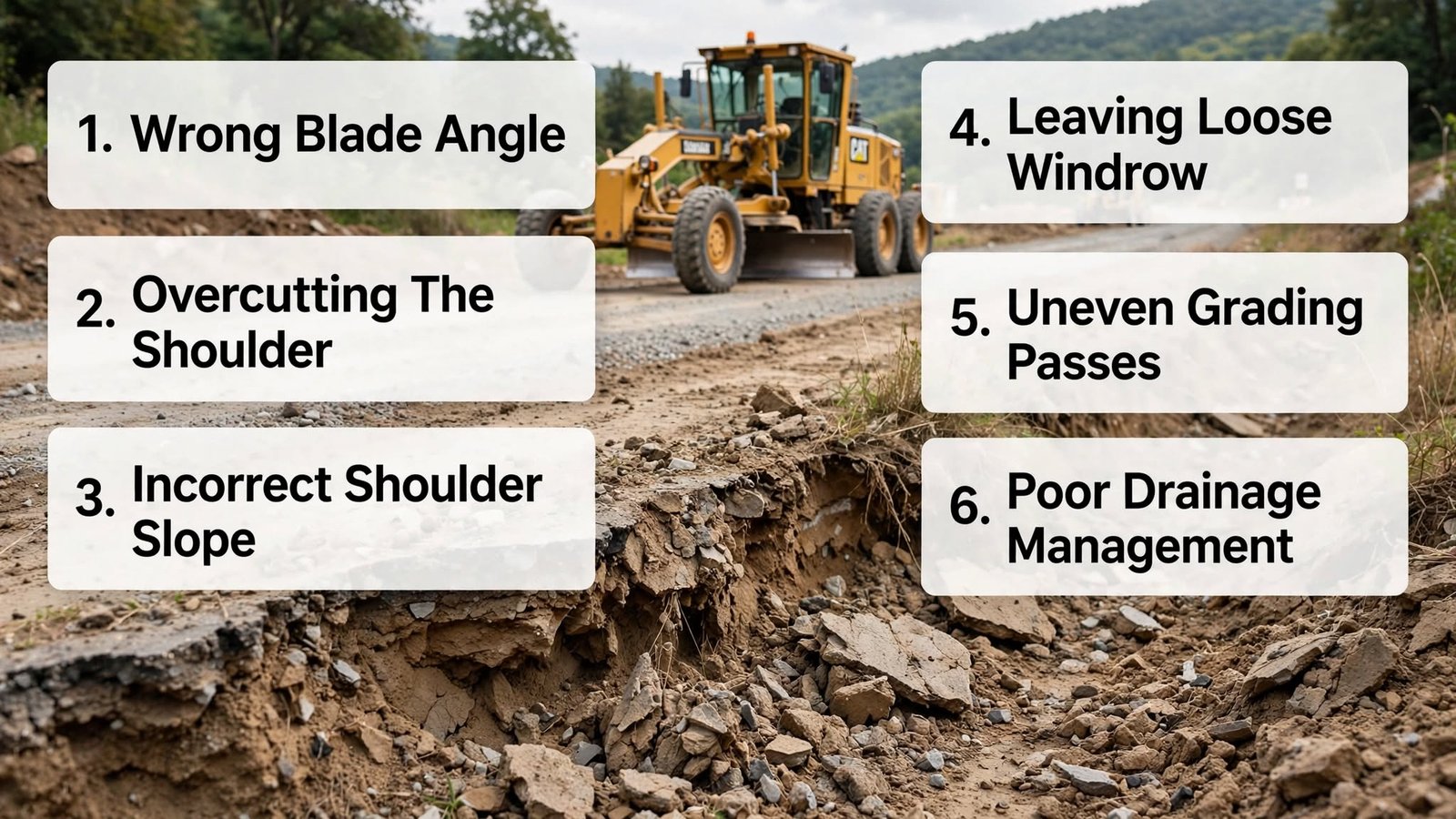
Motor grader shoulder maintenance mistakes weaken your road edge. A road shoulder holds the pavement edge. It carries drainage away from the road. It gives vehicles a place to recover. Poor shoulder work weakens the road edge. The pavement cracks. The edge crumbles. Repair costs climb. This post covers 6 motor grader shoulder maintenance mistakes. You will learn the cause of each error. You will learn the fix. Apply these solutions to your next road job. Protect the road edge. Save repair money.
A shoulder is not a place to dump material. A shoulder is a designed structure. It has a slope. It has a width. It has a compaction level. Each error breaks one of these design elements. The road edge pays the price.
Table of Contents
Wrong Shoulder Slope
The first of the motor grader shoulder maintenance mistakes is wrong slope. The shoulder must slope away from the pavement. Water runs off the road. Water runs into the ditch. A flat shoulder traps water. A shoulder sloping toward the pavement floods the road edge. Both errors weaken the road.
Set the shoulder slope 4 to 6 percent away from the pavement. This slope moves water fast. This slope does not erode the shoulder surface. The motor grader shoulder maintenance mistakes fix starts with the blade angle.
A county crew built a flat shoulder on a two mile road. Rain sat on the shoulder. Water seeped under the pavement edge. The edge cracked within one winter. The repair cost 12000 dollars. A 5 percent slope would have drained the water. This error cost the county far more than the original shoulder work.
Check the slope with a level or slope meter. Test every 200 feet. Adjust the blade until the slope hits the target. This fix takes minutes per section.
Loose Shoulder Material
The second of the motor grader shoulder maintenance mistakes is loose material. A shoulder needs compaction. Loose gravel washes away. Loose gravel does not support vehicle weight. The edge crumbles when a truck drifts onto the shoulder.
Compact the shoulder in layers. Spread 4 inches of material. Compact it with the grader tires. Spread the next layer. Compact again. This method builds a solid shoulder. The road edge gets support.
A contractor spread 12 inches of shoulder material in one pass. The material stayed loose. A truck drifted onto the shoulder. The tire sank 8 inches. The pavement edge broke away. The repair cost 8000 dollars. Layered compaction would have held the truck. This oversight caused the edge failure.
Use the grader tires for compaction. Make multiple passes over the fresh material. The weight of the machine compacts the surface. Run 4 to 6 passes per layer. This motor grader shoulder maintenance mistakes prevention tip uses the machine already on site.
Blade Angle for Shoulder Work
The third of the motor grader shoulder maintenance mistakes is wrong blade angle. The blade must move material away from the pavement. The blade must shape the slope. A blade angled toward the pavement pushes material onto the road. A blade angled too far away pulls material off the shoulder. Both errors waste material and weaken the edge.
Set the blade angle 25 to 35 degrees for shoulder work. This angle moves material away from the pavement. The material stays on the shoulder. The slope builds correctly. This adjustment keeps material in place.
A road crew used a 50 degree blade angle on a shoulder job. The blade threw material into the ditch. The crew lost 30 tons of shoulder gravel. The error cost 1200 dollars. A 30 degree angle would have kept the material on the shoulder.
Watch the material flow. Material should roll off the blade and stay on the shoulder. Material flying into the ditch means the angle is too steep. Material pushing onto the pavement means the angle is too shallow. Adjust one step at a time. This motor grader shoulder maintenance mistakes fix takes practice.
Pavement Edge Damage
The fourth of the motor grader shoulder maintenance mistakes is pavement edge damage. The blade cuts into the pavement edge. The cutting edge chips the asphalt. The chips grow into cracks. The cracks grow into potholes.
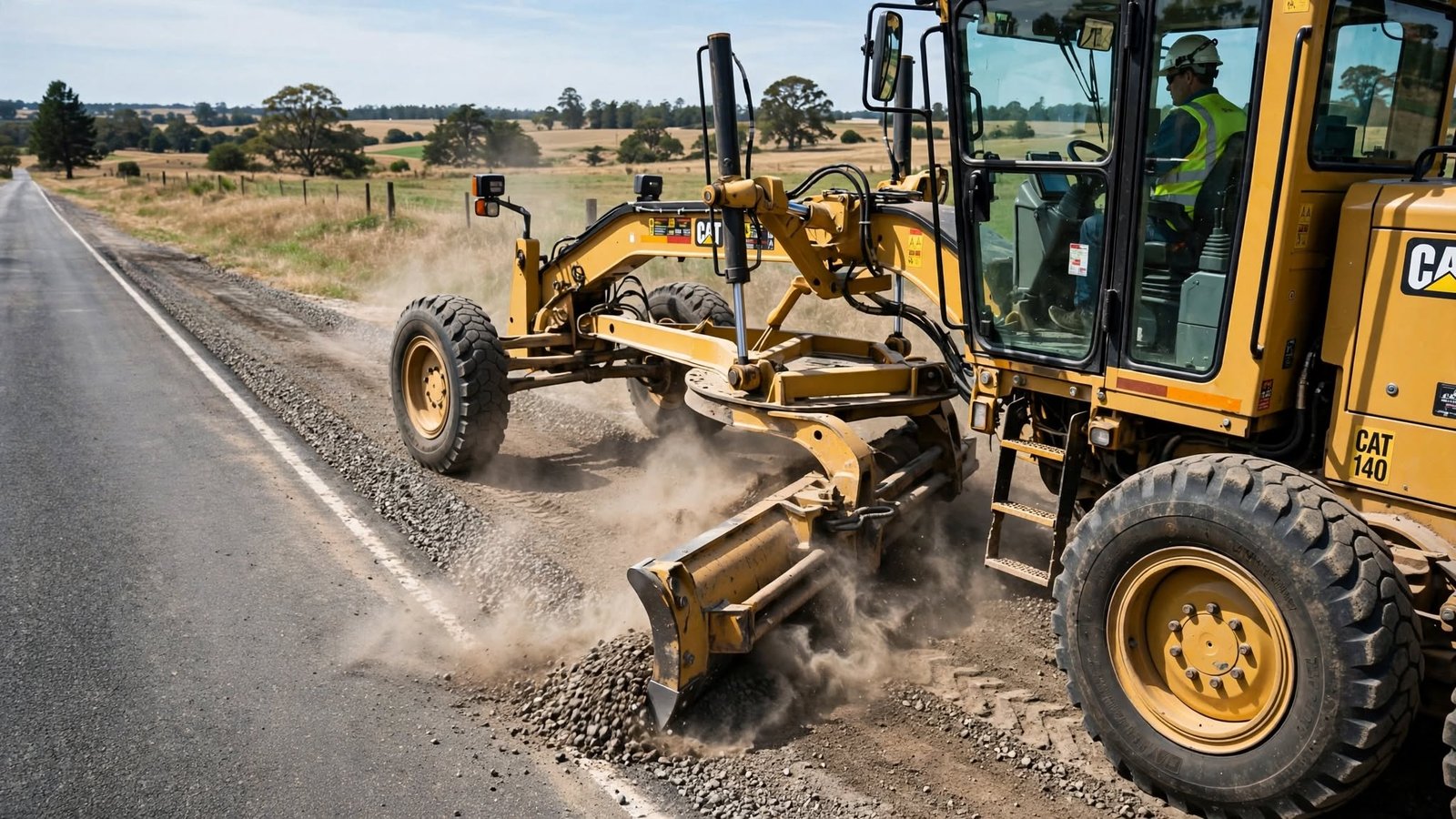
Keep the blade off the pavement. Leave a 1 to 2 inch lip of shoulder material against the pavement edge. The lip protects the asphalt. The lip prevents blade contact. This habit protects the pavement.
A municipal crew graded shoulders on a new asphalt road. The operator ran the blade against the pavement edge. The cutting edge chipped the asphalt. The chips became cracks within one year. The repair cost 15000 dollars. A 2 inch material lip would have protected the edge. Avoiding these motor grader shoulder maintenance mistakes protects new pavement.
Train operators to feel the pavement edge. Watch the blade position. Stop the machine and check the edge. A small error becomes a large repair. This motor grader shoulder maintenance mistakes fix protects expensive pavement.
Poor Drainage at the Shoulder
The fifth of the motor grader shoulder maintenance mistakes is poor drainage. The shoulder must drain into the ditch. A blocked ditch backs water onto the shoulder. A shoulder without a ditch outlet floods. Water softens the shoulder. Soft shoulders fail under traffic.
Clean the ditch during shoulder work. Remove debris from the ditch line. Shape the ditch to carry water away. The shoulder drains into the ditch. The road edge stays dry. This step connects the shoulder to the ditch.
A crew graded shoulders but left the ditch full of debris. Rain backed up onto the shoulder. The shoulder softened. A truck drifted onto the shoulder. The shoulder collapsed. The pavement edge broke. The repair cost 10000 dollars. Ditch cleaning would have prevented the failure. This oversight cost far more than the ditch work.
Check the ditch after each shoulder pass. Remove leaves, branches, and silt. Shape the ditch bottom to a consistent slope. Water flows away from the road. Overcoming these motor grader shoulder maintenance mistakes protects the entire road structure.
Inconsistent Shoulder Width
The sixth of the motor grader shoulder maintenance mistakes is inconsistent width. The shoulder narrows in some spots. It widens in others. Narrow spots give vehicles no recovery room. Wide spots waste material. Inconsistent width looks unprofessional.
Set a target shoulder width. Mark the width with stakes or paint. Grade to the marks. The shoulder stays consistent. This practice keeps the width uniform.
A highway crew built a shoulder with varying width. Some sections measured 2 feet. Some sections measured 6 feet. The narrow sections gave no recovery room. A vehicle drifted off the road at a narrow section. The vehicle hit a culvert. This error contributed to the accident.
Check the shoulder width every 500 feet. Measure from the pavement edge to the shoulder edge. Adjust the blade to match the target. Fixing these motor grader shoulder maintenance mistakes keeps the shoulder consistent.
Connection Between Errors
These 6 motor grader shoulder maintenance mistakes connect. Wrong slope traps water. Loose material fails under load. Wrong blade angle wastes material. Pavement edge damage starts cracks. Poor drainage softens the shoulder. Inconsistent width creates safety hazards. Each error weakens the road.
A crew that fixes all 6 motor grader shoulder maintenance mistakes builds a shoulder that lasts. The pavement edge stays protected. The drainage works. The repair costs drop. This approach pays for itself in reduced road repair.
Daily Routine to Prevent Errors
Start each shoulder job with a plan. Check the slope target. Check the width target. Check the ditch condition. Set the blade angle. Set the blade pitch. These steps prevent several motor grader shoulder maintenance mistakes before work starts.
Run the first pass at low speed. Watch the material flow. Watch the blade position against the pavement. Adjust the angle and pitch. Stop and check the slope. Make corrections early. This routine prevents the same errors from repeating across the job.
Check the ditch after each pass. Remove debris. Confirm water flows away from the road. Check the shoulder width every 500 feet. Check the slope every 200 feet. Record the measurements. Preventing these motor grader shoulder maintenance mistakes shows up in the numbers.
Training and Equipment Checks
Train every operator on these 6 motor grader shoulder maintenance mistakes. Show the correct slope. Show the correct blade angle. Show the correct width. Show the pavement edge protection. Practice on a short section. Correct errors on the spot. If operators understand windrow spreading errors, they will grasp this quickly.
One contractor trained four operators on motor grader shoulder maintenance mistakes. The crew built shoulders on a 20 mile road. Pavement edge damage dropped to zero. Shoulder failures dropped to zero. The contractor saved 30000 dollars in repair costs over two years.
Check the cutting edge before shoulder work. A sharp edge shapes the shoulder cleanly. A worn edge tears the surface. Check the blade angle indicator. Check the slope gauge if equipped. Check the tire pressure. Low tire pressure changes the equipment height. The blade angle changes. These equipment checks reduce motor grader shoulder maintenance mistakes.
Safety Around Shoulder Work
Shoulder work happens near traffic. Flaggers control the road. The operator watches for vehicles. Ground crews wear high visibility vests. The blade throws material. Workers stay clear of the spread zone. The safety fix includes proper gear.
A rock flew from a shoulder pass and struck a worker. The worker wore safety glasses and a hard hat. The gear prevented serious injury. Proper safety gear protects the crew.
Results and Final Fixes
One county tracked results for two seasons after fixing these issues. Pavement edge repairs dropped by 70 percent. Shoulder material use dropped by 20 percent. The county saved 45000 dollars over two years.
The road quality improved. The shoulders drained properly. The pavement edges stayed intact. The traveling public noticed the smoother, safer roads.
Now Apply These Fixes
Check your shoulder slope. Set it to 4 to 6 percent. Check your blade angle. Set it to 25 to 35 degrees. Check the material layer. Compact in 4 inch layers. Check the pavement edge. Leave a 2 inch material lip. Check the ditch. Clean the debris. Check the width. Mark the target.
These fixes take minutes. The savings last for years. Your road edge stays strong. Your repair costs drop. Your road lasts longer.
Now go check your shoulder. Fix the first error. Watch the water drain. The road edge will hold.