
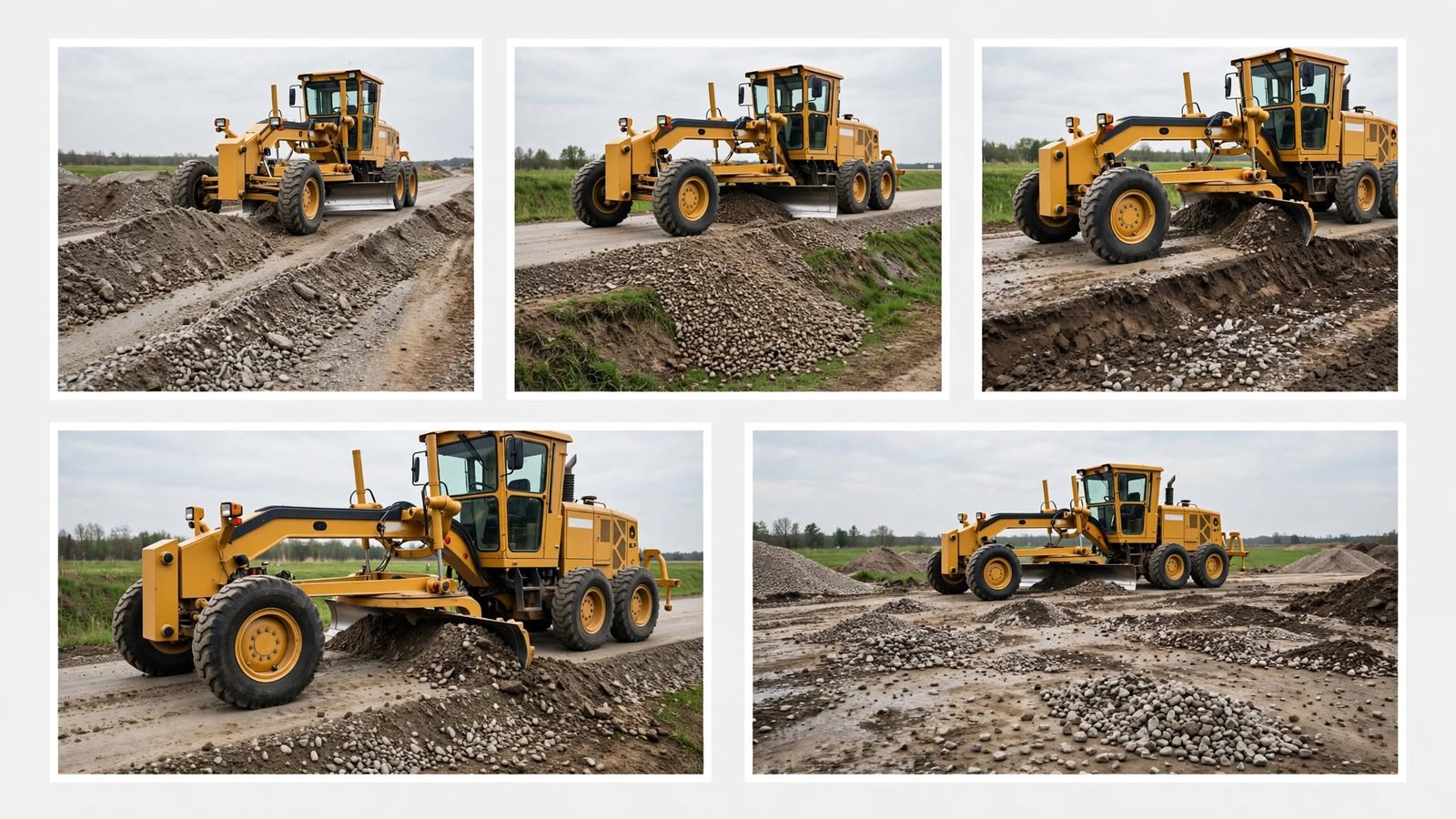
Motor grader windrow spreading mistakes waste material. They waste fuel. They waste time. A windrow holds your base material. The grader spreads the windrow across the road. Poor technique throws material off the shoulder. Poor technique leaves thick spots and thin spots. This post covers 5 motor grader windrow spreading mistakes. You will learn the cause of each error. You will learn the fix. Apply these solutions to your next spreading job. Keep your base material on the road.
A windrow is a long pile of material. A loader or truck builds the windrow. The grader picks up the windrow with the blade. The operator rolls the material across the blade face. The material spreads across the road width. These spreading errors break this flow. The material piles. The material spills. The road gets uneven.
Table of Contents
Wrong Blade Angle for Windrow Spreading
The first of the motor grader windrow spreading mistakes is wrong blade angle. The blade must roll material. The blade must not push material. A straight blade pushes the windrow forward. The windrow grows in front of the blade. Material spills off the sides. This error wastes material on every pass.
Set the blade angle 30 to 45 degrees. This angle rolls material across the blade face. The material flows to the side. The windrow spreads evenly. Correct blade angle fixes most spreading issues.
A road crew spread 200 tons of base rock. The operator ran a straight blade. The windrow pushed forward. Rock spilled off both shoulders. The crew lost 15 tons of material. The error cost 600 dollars in lost rock. A 35 degree blade angle would have kept the material on the road.
Check the blade angle before each pass. Stop the machine. Look at the blade from the side. The leading edge points toward the rear tire. Adjust until the angle sits near 35 degrees. This fix takes one minute.
Incorrect Moldboard Pitch
The second of the motor grader windrow spreading mistakes is incorrect pitch. Pitch controls how material rolls. Too much forward pitch digs the blade. The blade stops the windrow. Material piles in front of the blade. Too much backward pitch lifts the blade. The blade rides over the windrow. Material stays in the pile.
Set pitch 0 to 2 degrees forward for windrow spreading. This near neutral setting rolls material across the blade. The windrow feeds into the blade smoothly. The material spreads in a constant layer. This adjustment keeps the flow steady.
A highway crew spread gravel base on a two mile road. The operator ran 6 degrees forward pitch. The blade dug into the windrow. The machine stalled twice. Material piled in front of the blade. The error slowed the job by half a day. A pitch change to 1 degree forward fixed the flow. The crew finished the road on schedule.
Watch the material roll. Smooth roll means correct pitch. Chattering means too much forward pitch. Piling means too much backward pitch. Adjust one degree at a time. This fix takes practice.
Wrong Travel Speed
The third of the motor grader windrow spreading mistakes is wrong speed. Too much speed bounces the blade. The blade skips over the windrow. Material spreads in lumps. Too little speed stalls the machine. The blade digs in. The windrow stops moving.
Set speed 3 to 5 miles per hour for windrow spreading. This speed keeps the blade in contact with the material. The windrow feeds steadily. The material spreads evenly. This fix balances power and control.
A contractor spread 300 tons of crushed rock. The operator ran 7 miles per hour. The blade bounced over the windrow. Rock spread in piles. The crew needed three extra passes to level the surface. The error cost two hours of work. A speed drop to 4 miles per hour fixed the spread. The surface came out level in one pass.
Test the speed on a short section. Mark 200 feet. Time the pass. A pass under 30 seconds is too fast for spreading. Slow down one gear. Watch the blade. The material rolls when the speed is right. This fix saves fuel and time.
Poor Windrow Placement
The fourth of the motor grader windrow spreading mistakes is poor windrow placement. The loader builds the windrow in the wrong spot. A windrow too close to the shoulder pushes material off the road. A windrow in the center leaves the edges thin. Bad placement forces the operator to compensate. Compensation creates uneven layers.
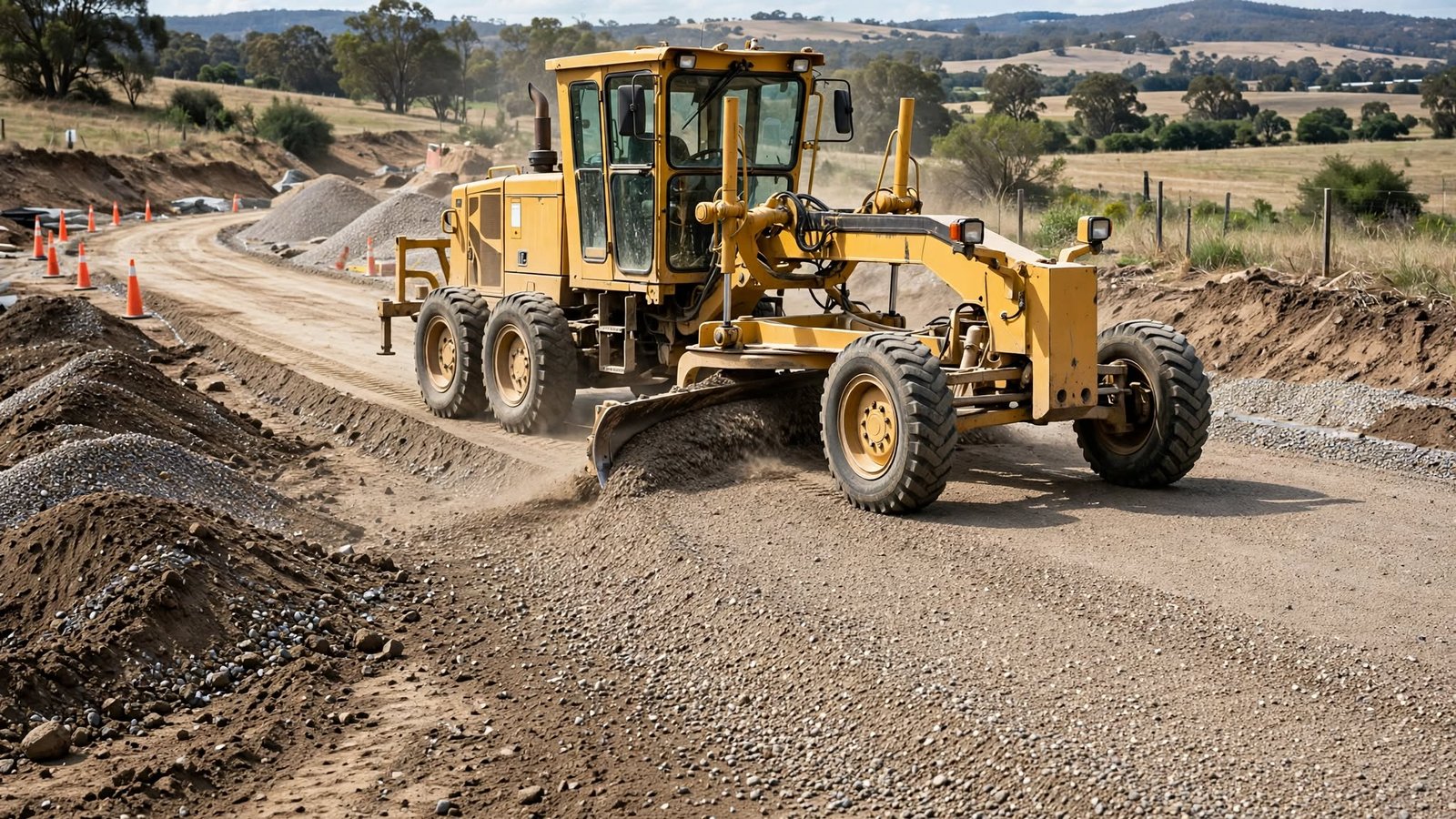
Build the windrow one third of the road width from the edge. This placement gives the blade room to spread. Material reaches both edges. Material stays on the road. Correct placement prevents these spreading mistakes before they start.
A site crew built the windrow on the shoulder line. The operator spread the material. Half the windrow went off the road. The crew lost 20 tons of base rock. The error cost 800 dollars. Moving the windrow one third inward would have kept the material on the road.
Communicate with the loader operator. Explain the correct windrow placement. Mark the placement line with paint or stakes. The loader builds the windrow on the line. The grader spreads the material evenly. This fix starts before the grader moves.
No Grade Reference
The fifth of the motor grader windrow spreading mistakes is no grade reference. The operator spreads without a target elevation. The layer comes out thick in places. The layer comes out thin in others. The thin spots fail compaction. The thick spots waste material.
Set a grade reference before spreading. Use a string line. Use grade stakes. Use a laser or GPS system. The reference shows the target elevation. The operator matches the spread to the reference. This fix keeps the layer uniform.
A parking lot crew spread base rock without a reference. The layer varied from four inches to nine inches. The thin spots failed the compaction test. The crew added 50 tons of extra rock. The error cost 2000 dollars. A string line would have kept the layer at six inches.
Check the grade reference before each pass. Look at the stakes. Look at the string line. Look at the grade display. Keep the blade on target. The material spreads to the correct thickness. This fix saves material on every load.
Connection Between These Motor Grader Windrow Spreading Mistakes
These 5 motor grader windrow spreading mistakes connect. Wrong blade angle causes material spill. Incorrect pitch causes material pile. Wrong speed causes uneven spread. Poor placement causes shoulder loss. No grade reference causes thick and thin spots. Each mistake costs material. Each mistake costs money.
A crew that fixes all 5 motor grader windrow spreading mistakes saves 10 to 20 percent of base material. On a 10000 ton project, that is 1000 to 2000 tons saved. At 40 dollars per ton, the savings hit 40000 to 80000 dollars. The motor grader windrow spreading mistakes fix pays for itself many times over.
Daily Routine to Prevent Motor Grader Windrow Spreading Mistakes
Start each spreading shift with a blade check. Set the blade angle to 35 degrees. Set the pitch to 0 to 2 degrees forward. Check the cutting edge. A sharp edge rolls material better. These steps prevent the first two motor grader windrow spreading mistakes.
Check the windrow placement. Walk the road. Look at the windrow line. Confirm the loader built the windrow one third from the edge. Talk to the loader operator. Correct the placement if needed. This step prevents the fourth error.
Set the grade reference. Check the stakes. Check the string line. Check the grade display. Confirm the target elevation. This step prevents the fifth error. Start the first pass at 4 miles per hour. Watch the material roll. Adjust speed if the blade bounces or stalls. This step prevents the third error.
Track the results. Count the loads. Measure the spread thickness. Compare the material used to the plan. Fewer motor grader windrow spreading mistakes mean less material used. The numbers prove the improvement.
Training to Reduce Motor Grader Windrow Spreading Mistakes
Train every operator on these 5 motor grader windrow spreading mistakes. Show the correct blade angle. Show the correct pitch. Show the correct speed. Show the correct windrow placement. Show the grade reference. Practice on a short section. Correct the mistakes on the spot.
One contractor trained five operators on motor grader windrow spreading mistakes. The crew spread a 5000 ton base project. Material waste dropped from 12 percent to 3 percent. The contractor saved 450 tons of rock. At 40 dollars per ton, the saving hit 18000 dollars on one project. The motor grader windrow spreading mistakes training paid back in one week.
Equipment Checks That Reduce Motor Grader Windrow Spreading Mistakes
Check the blade daily. A worn cutting edge causes the first spreading error. Replace the edge below one inch thickness. Check the moldboard for bends. A bent moldboard changes the blade angle. Check the circle side play. Loose circle parts change the blade position.
Check the tires. Low tire pressure changes the machine height. The blade angle changes. The material spreads unevenly. Check pressure weekly. Match the sidewall specification. These equipment checks reduce motor grader windrow spreading mistakes.
Safety Around Windrow Spreading
Windrow spreading happens near workers. Ground crews walk beside the road. The blade throws material. Rocks fly from the windrow. Workers stay clear of the spread zone. The operator checks the area before each pass. The motor grader windrow spreading mistakes fix includes safety.
A rock flew from a windrow and struck a worker. The worker wore safety glasses. The glasses saved an eye. The safety fix includes eye protection for the crew. Hard hats protect against larger stones.
Results from Fixing Motor Grader Windrow Spreading Mistakes
One contractor tracked the results for one season. The crew fixed these 5 errors. Fuel consumption dropped by 15 percent. Material waste dropped by 70 percent. Pass counts dropped by 20 percent. The contractor saved 60000 dollars across the season. The fix delivered clear returns.
The road quality improved. The base layer came out uniform. Compaction tests passed on the first try. The paving crew found a smooth surface. The fix improved the final product.
Now Apply These Fixes
Check your blade angle. Set it to 35 degrees. Check your pitch. Set it to 0 to 2 degrees forward. Check your speed. Run 3 to 5 miles per hour. Check the windrow placement. Build it one third from the edge. Check the grade reference. Set a string line or GPS.
These fixes take minutes. The savings last the whole project. Your base material stays on the road. Your fuel cost drops. Your schedule stays on track.
Now go check your windrow. Fix the first error. Watch the material roll. The road will come out right.