
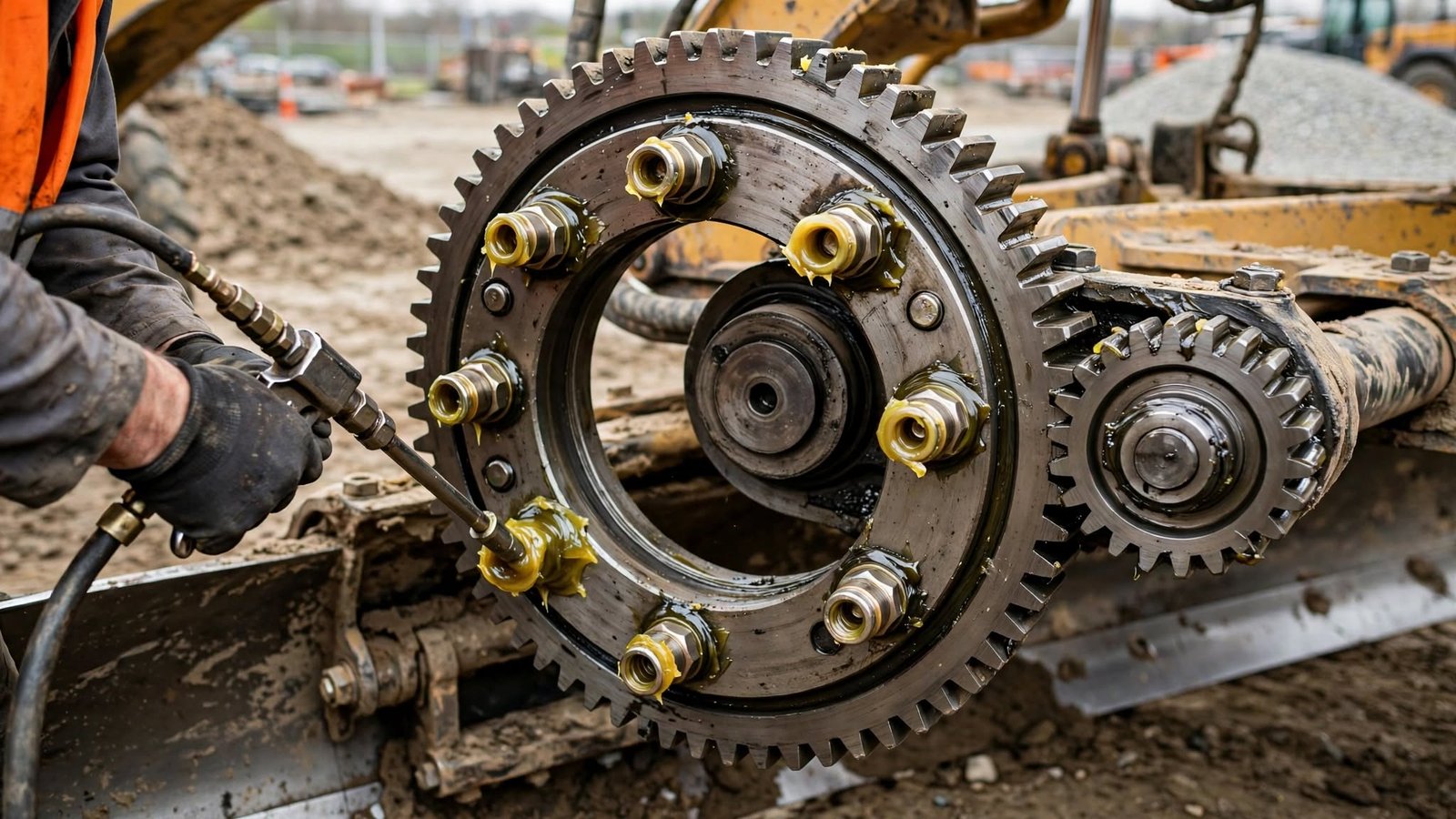
Motor Grader Circle Drive maintenance can be the difference between making money from the season and spending it. Ensuring good care on this part is vital. Many operators will regularly maintain the engine and transmission but neglect greasing of the drive components. When the blade begins to ‘chatter’ and no longer maintain an angle, you may be in for a large expense. Replacing the assembly can cost $20k+ and mean 2-3 weeks of downtime.
Unfortunately, most failures on the Motor Grader Circle Drive can be attributed to poor greasing. Despite being very simple to maintain, many of these greasing points are easily forgotten due to difficult access, or simply not checking whether it has been completed. This article includes 6 key greasing points to ensure your Motor Grader Circle Drive runs smoothly, and signs that there may be a problem.
Table of Contents
Circle Rack Gears
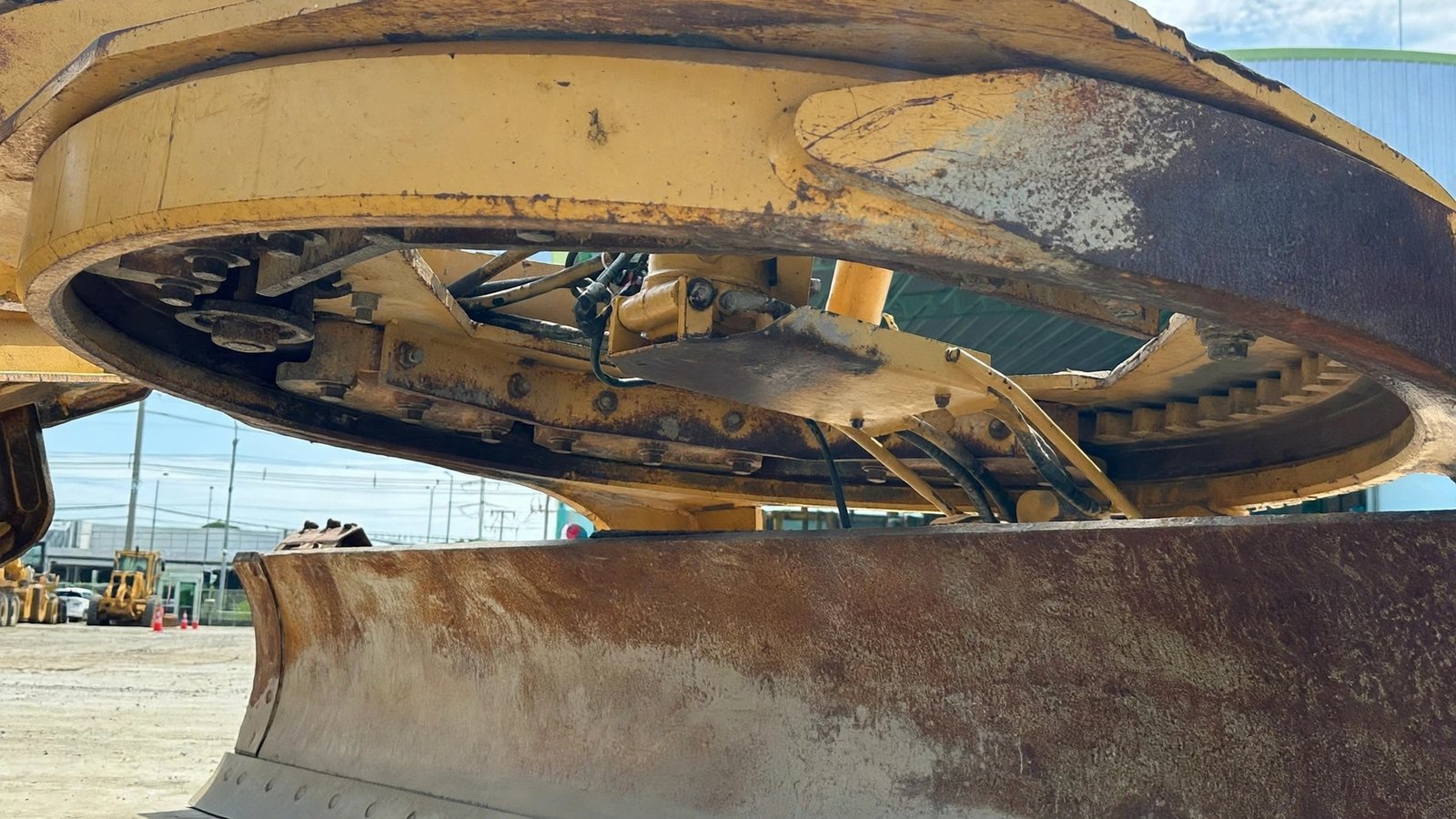
The rack gears on the Motor Grader Circle Drive are a large ring of teeth that are turned by the pinion gear to operate the blade. As the gears sit at the bottom of the machine, they are at risk of getting very dirty. If the teeth become dry, wear can quickly occur.
It is recommended by most manufacturers that this greasing point be maintained daily, or every 10 hours. To ensure good maintenance, you want to see new grease coming out of the teeth. If the teeth appear dry and dusty, or if there is visible metal (no grease) at all, you are falling behind.
To make greasing easier, many experienced operators will park the machine at night with the mouldboard facing the cab. This way, greasing in the morning is quick and easy as only the front portion of the teeth require greasing. If the teeth have hard dried grease and grit build up, you should scrape this off before greasing. If you apply new grease to dirty teeth you will cause the abrasive dirt to rub against the metal.
Pinion Gears
The pinion gear is small and drives the rack gears. As the blade is turned, the pinion gears are placed under load. If fine grading or turning heavy windrows, the pinion gears take a lot of stress. If left dry, uneven wear can occur on the pinion. Once the shape of the pinion teeth becomes damaged, the rack gears will begin to be eaten away.
Grease the pinion gears at the same time as the rack. If pitting in the pinion, or significant wear marks on the pinion teeth is visible, there may be an issue. If pinion wear is caught early, you may be able to simply replace a small part. However, if left, the damaged pinion will cause damage to the rack gears. You will then be faced with replacing the entire Motor Grader Circle Drive.
Use an NLGI 2 lithium based grease with extreme pressure additives. Cheap greases may appear to be working, however will be squeezed out of the gears under pressure.
Circle Shoes & Wear Strips
Many machines have greasing points on the replaceable circle shoes. As these are located in a less obvious area of the machine, they are often forgotten.
As the circle shoes become worn or there is no lubrication, the circle will sag. This causes misalignment in the pinion and rack gears. This increased misalignment causes more effort from the hydraulic motor to rotate the blade. Eventually, the motor may stall or teeth may be stripped.
Apply grease to the circle shoe greasing points so that new grease is coming out. Now, inspect the circle shoes. If there is little wear material left, or if any of the shoes have broken off, no amount of greasing will improve the alignment of the gears. If the machine uses a conventional circle design, checking the condition of the circle shoes is a part of daily inspection of the machine to prevent unexpected work orders in relation to the Motor Grader Circle Drive.
Drawbar Ball Joint
The drawbar ball joint connects the blade assembly to the rest of the machine. As it is subjected to impact from cutting and turning, it requires regular greasing. However, because this is not directly part of the circle drive itself, it can be easily forgotten. If left dry, it places strain on the entire Motor Grader Circle Drive.
Grease this greasing point daily. Ensure that new grease is coming out of the joint. If you notice play in the joint, or a clunking sound when changing blade angles, the ball joint may be worn. If the ball joint is worn, the blade assembly can move in ways that it is not intended to. This causes excessive wear in the circle shoes and teeth. Simply greasing this greasing point daily can avoid a large issue.
Gearbox & Slip Clutch
Some machines have a gearbox to transfer power from the hydraulic motor to the pinion. Some machines have a slip clutch to protect the system from sudden pressure. Failure to maintain this greasing point can lead to failure of the Motor Grader Circle Drive, and cannot be avoided with regular greasing.
Ensure that the gearbox oil level is correct according to your manual. If the oil level is low, or appears milky or dirty, take action. If your machine has a slip clutch, keep it clean and clear of compacted dirt. If the slip clutch begins to wear or jam, it will no longer protect the circle drive from sudden pressure. Pressure will be transferred directly to the teeth.
Many people are made aware too late that the Motor Grader Circle Drive is a complex system. Every part relies on the others.
Use your Senses!
Although not technically a greasing point, using your senses can help to prevent failure. Rotate the circle fully to listen for smooth running. If you hear grinding, or feel any roughness or resistance in certain areas, this suggests that the teeth may be worn or that the Motor Grader Circle Drive is dry.
Feel for smooth operation of the blade. Is it difficult to rotate? Is increased pressure required to rotate the blade under load? In one case study, a John Deere 770G had difficulty rotating the blade halfway through rotation. There was a screeching noise. It was discovered that poor maintenance of lubrication and worn circle shoes caused the issue. The repair required new circle shoes, new backing plates and a new pinion. Had the operator simply taken 2 minutes to grease and check for issues, this expensive repair could have been avoided.
If you are hearing any unusual noises, do not simply increase the volume in your cab and continue grading. The Motor Grader Circle Drive will give you signs that something may be wrong. It is up to you to listen.
Why it Matters
The Motor Grader Circle Drive and Hydraulic system combined usually account for 35% of maintenance cost on a motor grader. This is the largest maintenance expense on the machine. Often the difference between paying $500 for preventative maintenance and $20,000 for a rebuild can simply depend on whether maintenance was carried out at the greasing points, much like understanding essential safety protocols.
Operators may run the same machine for thousands of hours without requiring an overhaul of the circle drive. This is simply because they have a regular maintenance pattern. They regularly grease the teeth, check the condition of the circle shoes, and listen out for grinding. They treat the Motor Grader Circle Drive as a costly and important system.
Operators who allow the circle drive to dry out and cause stripping of the rack gears were simply trying to save time. However, this is not saving time. They are essentially taking a loan from the future, as they will be hit with a very expensive bill.
Simple Maintenance
Having a simple maintenance regime will ensure that the Motor Grader Circle Drive can be well maintained. Perform the following at regular intervals:
Daily: Take your grease gun and grease the rack teeth, pinion and circle shoe greasing points. Check for new grease. Rotate the circle and check for abnormal noises. Check the teeth for dryness/damage.
Weekly: Get under the machine with a torch and check the condition of the circle shoes and wear strips. If the machine has a gearbox, check the oil level and ensure it is correct. Remove any compacted dirt/debris in the circle area.
During Service: Measure the gear teeth to check for wear. Check for pinion wear. If parts are wearing at an abnormal rate, investigate the causes before it leads to a rebuild.
Conclusion
Very rarely will problems occur suddenly with the Motor Grader Circle Drive. Usually, they occur gradually due to regular neglect of greasing, worn circle shoes that have not been checked, and unusual noises that have not been heard. Once the blade is no longer maintaining an angle and a loud chattering noise can be heard from within the cab, it is likely you will be faced with a rebuild.
By following the 6 tips in this article, it is easy to maintain the Motor Grader Circle Drive. Grease the teeth, pinion and shoes. Check the drawbar ball joint, and monitor the condition of the gearbox and clutch. Lastly, always check for unusual noise. Making this part of your daily routine will ensure that your Motor Grader Circle Drive runs smoothly and you will save money. Good maintenance of this part of the machine will pay for itself in every season!