
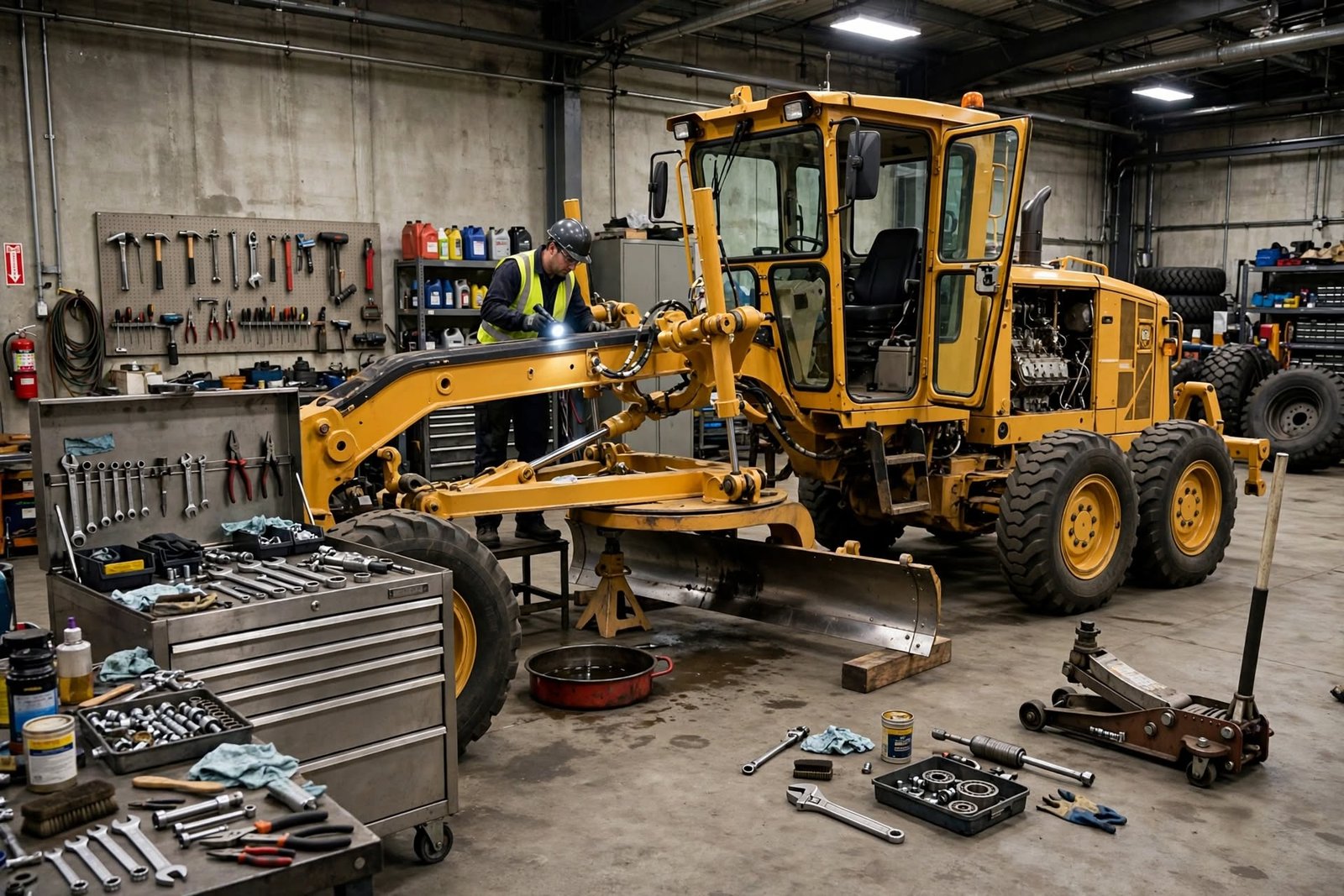
Proper 2026 MotorGrader Maintenance changes that story. It keeps blades cutting clean for thousands of hours. It saves money that would otherwise burn through fuel and replacement parts. But most fleets never get there. They repeat the same seven mistakes over and over. Here they are. Read carefully. Blades don’t just wear out. They get killed by bad habits, lazy checks, and stupid shortcuts. Every single day, a perfectly good motor grader blade meets its end way too early. The steel doesn’t fail. The operator fails. The mechanic fails. The maintenance schedule fails.
Table of Contents
No One Looks at the Blade Before Starting
Morning starts. Operator climbs in. Fires up the engine. Never looks down. Never touches the cutting edge. This happens everywhere. A quick pre-start check takes less than a minute. Run a gloved hand along the bottom. Feel for rolled steel. Look for hairline cracks near the bolt holes. Check if the edge sits straight or wobbles loose.
2026 MotorGrader Maintenance starts right there. Before the first pass. Before the machine moves an inch.
Missing this check means missing a cracked edge that snaps ten minutes into grading. Then the whole shift stops. Replacement takes hours. The project falls behind. All because sixty seconds of essential 2026 MotorGrader Maintenance got skipped.
Some mechanics mark the blade with chalk every morning. A thick line across the cutting edge. If the line breaks in different spots, that means uneven wear. Simple trick. Works every time. No chalk? Use spray paint. Any mark works. Just look at it.
Wrong Angle, Wrong Results
Operators love steep angles. They think aggressive cuts finish faster. They are wrong. Steep angle drives the blade straight down. The cutting edge takes vertical hits from every rock and root. That impact chips the hardened surface. Chips turn into cracks. Cracks turn into broken sections falling off.
Flat angle drags instead of cuts. Dragging generates heat. Lots of heat. Enough heat to soften the steel. Soft steel rolls over like dough. The edge curls backward and becomes useless.
Proper 2026 MotorGrader Maintenance demands angle adjustments for every material type. Gravel needs a medium pitch. Around 40 degrees. Clay needs flatter. About 30 degrees. Hard-packed base requires steeper. Closer to 50.
Changing angles takes thirty seconds. Pull the lever. Adjust the cylinder. Keep grading. But most operators never change it. They set it once and forget it. That forgetfulness destroys blades faster than abrasion ever could. Proper 2026 MotorGrader Maintenance prevents this.
Center Wear Gets Ignored
Walk up to any used grader. Look at the blade. The center section always looks thinner. Always. Why? Because operators grade the same path repeatedly. They never shift the blade sideways. The middle takes all the abuse. The edges stay thick. The center wears through to the moldboard. Then the moldboard gets damaged. Expensive damage.
Effective 2026 MotorGrader Maintenance requires weekly thickness measurements. Five points across the blade. Left end. Left quarter. Center. Right quarter. Right end.
If the center measures 3 millimeters thinner than the ends, that blade needs side-shifting. Move the blade laterally every few passes. Distribute the work across the entire cutting edge.
Some smart fleets use a simple ruler with markings as part of their 2026 MotorGrader Maintenance plan. Same ruler every week. Same measurement spots. They track the numbers in a notebook. When the center reaches 60% wear, they reverse the blade. No guesswork. Just data.
Ignoring center wear means throwing away perfectly good steel at the ends while the middle self-destructs. That makes zero financial sense.
Reversing the Blade at the Wrong Time
Dual-edged blades give second chances. But only if the reversal happens at the right moment. Reverse too early? Waste half the blade life. The first edge still has plenty of cut left. But someone flips it anyway. Hours of useful service get thrown in the scrap bin.
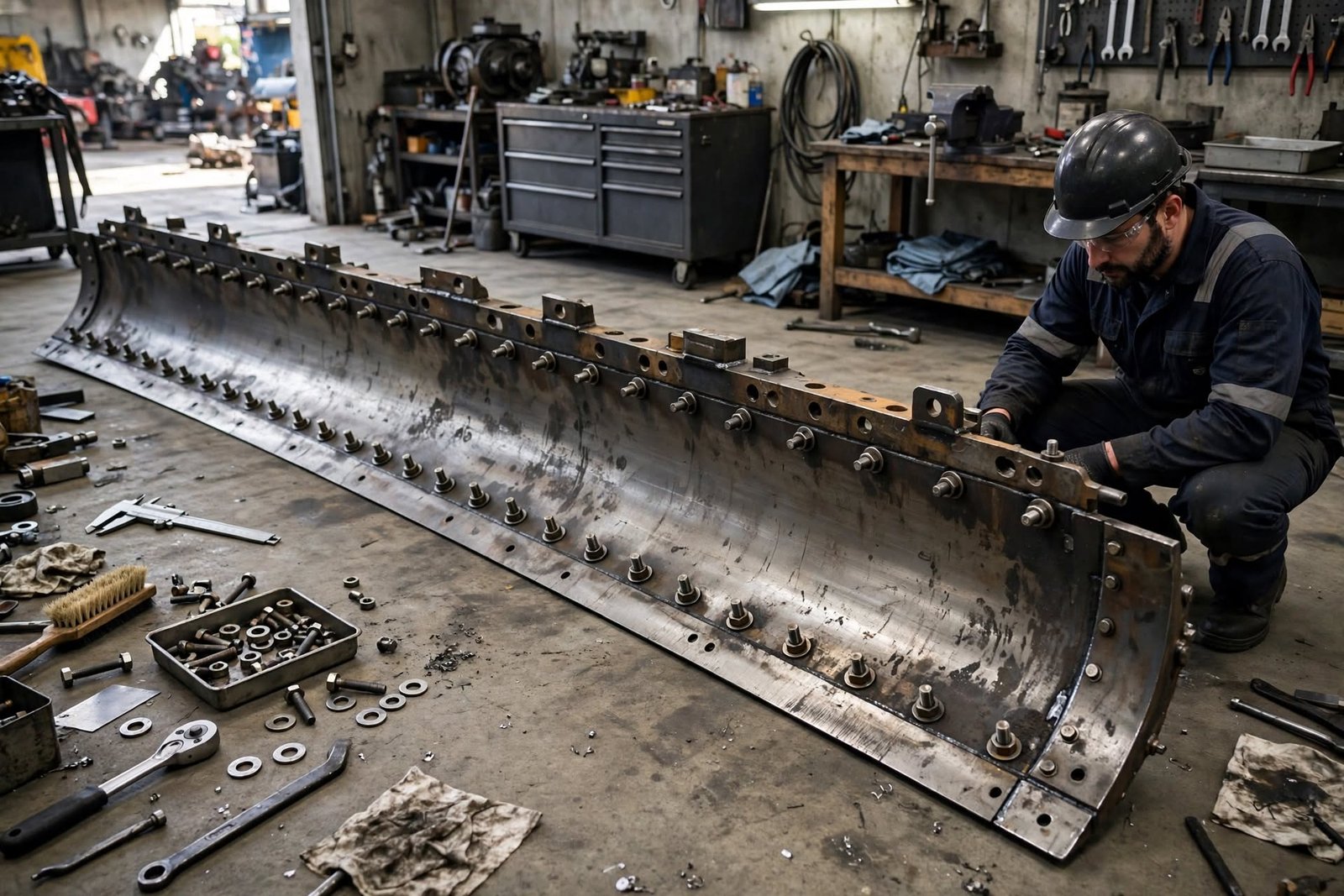
Reverse too late? Disaster waiting. Thin edges snap under pressure. Snapped edges send metal flying. Dangerous for everyone nearby. Dangerous for the machine.
The sweet spot for 2026 MotorGrader Maintenance falls around 60 to 70 percent wear. At that point, the edge has done most of its work but remains thick enough to survive reversal stress.
Log operating hours religiously. Most blades last about 180 hours per edge in average conditions. Reverse at 180, not 120. Those extra 60 hours per edge add up. Over a year, that saves one complete blade replacement per machine, a core principle of 2026 MotorGrader Maintenance.
Mark the reversal date on the blade with paint. White paint on the new edge. Red paint after reversal. No confusion. No guessing. Just clear visual cues.
Circle and Drawbar Loose Components
The blade attaches to the circle. The circle rides on the drawbar. When these components get loose, the blade suffers. Excessive circle play makes the blade wobble during grading. Wobble creates chatter marks on the cutting edge. Chatter marks concentrate stress. Stress fractures the steel. Fractured steel breaks.
Advanced 2026 MotorGrader Maintenance includes circle wear strip inspections. Check clearance with a feeler gauge. Replace shims when clearance exceeds specifications. Grease drawbar ball joints every ten hours. Dry joints bind. Binding causes twisting.
Twisting elongates bolt holes. Elongated holes let the blade shift position during work. Shifting creates uneven wear patterns that cut blade life by 40 percent. Complete circle inspections every 500 hours are a crucial part of 2026 MotorGrader Maintenance. Not optional. Mandatory.
Some mechanics use a pry bar to check circle movement. Insert the bar between the circle and the drawbar. Apply gentle pressure. If movement exceeds one-eighth inch, adjustment needed. Simple test. Quick results. Prevents hidden destruction.
Bolt Torque Wildly Inaccurate
Bolts hold everything together. Yet bolt torque gets ignored constantly. Impact wrenches set to maximum pressure become the default tool. Stretched threads lose clamping force. Loose bolts let the cutting edge shift back and forth. Shifting wears bolt holes into oval shapes. Oval holes never hold properly again.
Under-torqued bolts cause similar nightmares. The cutting edge moves during every pass. Movement hammers against the bolts. Bolts shear off. Sheared bolts at full speed send the cutting edge flying. Flying steel damages hydraulic lines. Damages tires. Damages everything nearby.
Proper 2026 MotorGrader Maintenance demands calibrated torque wrenches. No exceptions. Most grader blade bolts need between 450 to 600 foot-pounds. Check manufacturer specifications for exact numbers.
Torque should get checked twice during routine 2026 MotorGrader Maintenance. First during installation. Second after the first hour of operation. Heat and vibration settle everything. The second pass ensures proper clamp load stays maintained.
Use torque stripe paint on bolt heads. A thin line across the bolt and the moldboard. If the line breaks, the bolt moved. Retorque immediately. Simple visual indicator. Works perfectly.
Weather and Ground Ignorance
Weather changes everything. Wet clay sticks like glue. Dry gravel acts like sandpaper. Frozen ground becomes concrete. Operators who treat every condition the same destroy blades quickly. Wet materials increase drag. More drag means more edge wear. Adjust the moldboard tilt to shed material faster. Keep the blade clean.
Dry conditions generate friction heat. Heat softens the steel temper. Soft steel curls and rolls. Reduce ground speed in dry, abrasive materials. Let the blade cut, not drag.
Frozen ground requires multiple light passes. One deep pass chips the carbide surface. Chipped edges never produce smooth finishes. Just rough, uneven grading that requires rework.
Daily weather assessments are a core part of 2026 MotorGrader Maintenance. Check the forecast. Adjust techniques accordingly. Some operators carry an infrared thermometer. Point it at the blade after grading. If the temperature exceeds 150 degrees Fahrenheit, slow down. Excessive heat means excessive wear. Cool the blade with a water spray if necessary. Extreme measure but works.
The Real Cost of These Mistakes
Numbers tell the real story of poor 2026 MotorGrader Maintenance. A new cutting edge costs between $800 to $1500 depending on size and material. Replacing it prematurely twice a year adds $3000 to operating costs.
Fuel consumption increases 15 percent with dull blades. Over 2000 operating hours, that extra fuel burns another $2000. Downtime kills productivity. A snapped blade stops work for two to three hours. Project delays accumulate. Penalty clauses in contracts drain profits.
Safety incidents from flying blade fragments lead to OSHA reports, fines, lawsuits, and insurance premium hikes. All avoidable with proper 2026 MotorGrader Maintenance.
One fleet manager tracked blade expenses across twenty graders. Implemented strict 2026 MotorGrader Maintenance protocols. Reduced blade consumption by 45 percent within one year. Saved over $40,000 annually. Just from better care. No new equipment purchased. No expensive upgrades. Just consistent, disciplined maintenance.
Practical Daily Routine
Create a simple daily routine based on 2026 MotorGrader Maintenance guidelines. Stick to it. Morning: Walk around the blade. Visual inspection. Glove test for rolled edges. Check bolt tightness with a torque wrench. Measure thickness at five points. Record numbers in a logbook.
During operation: Adjust angles for material changes. Shift blade laterally every few passes. Monitor ground speed. Watch for unusual vibration or noise. After shift: Clean the blade. Remove packed material. Inspect for new damage. Note any concerns for the next operator.
This routine takes fifteen minutes total. Fifteen minutes that saves thousands of dollars annually. No excuse to skip it.
Final Thoughts on Blade Preservation
Motor grader blades work hard. They deserve proper care. The seven errors listed here happen everywhere. Skipped inspections. Wrong angles. Ignored center wear. Improper reversal timing. Loose circle components. Inaccurate bolt torque. Weather ignorance. Every single one destroys blade life.
Correcting these mistakes requires commitment to 2026 MotorGrader Maintenance. Training. Consistency. But the results speak for themselves. Longer blade life. Lower fuel consumption. Fewer breakdowns. Safer job sites.
2026 MotorGrader Maintenance is not complicated. It just requires doing the basics correctly every single day. No shortcuts. No excuses. Just solid, reliable maintenance practices that keep blades cutting clean and machines earning money. The choice is simple. Destroy blades through neglect. Or preserve them through disciplined care. Choose wisely. The equipment and the budget will both notice the difference.
One Comment