
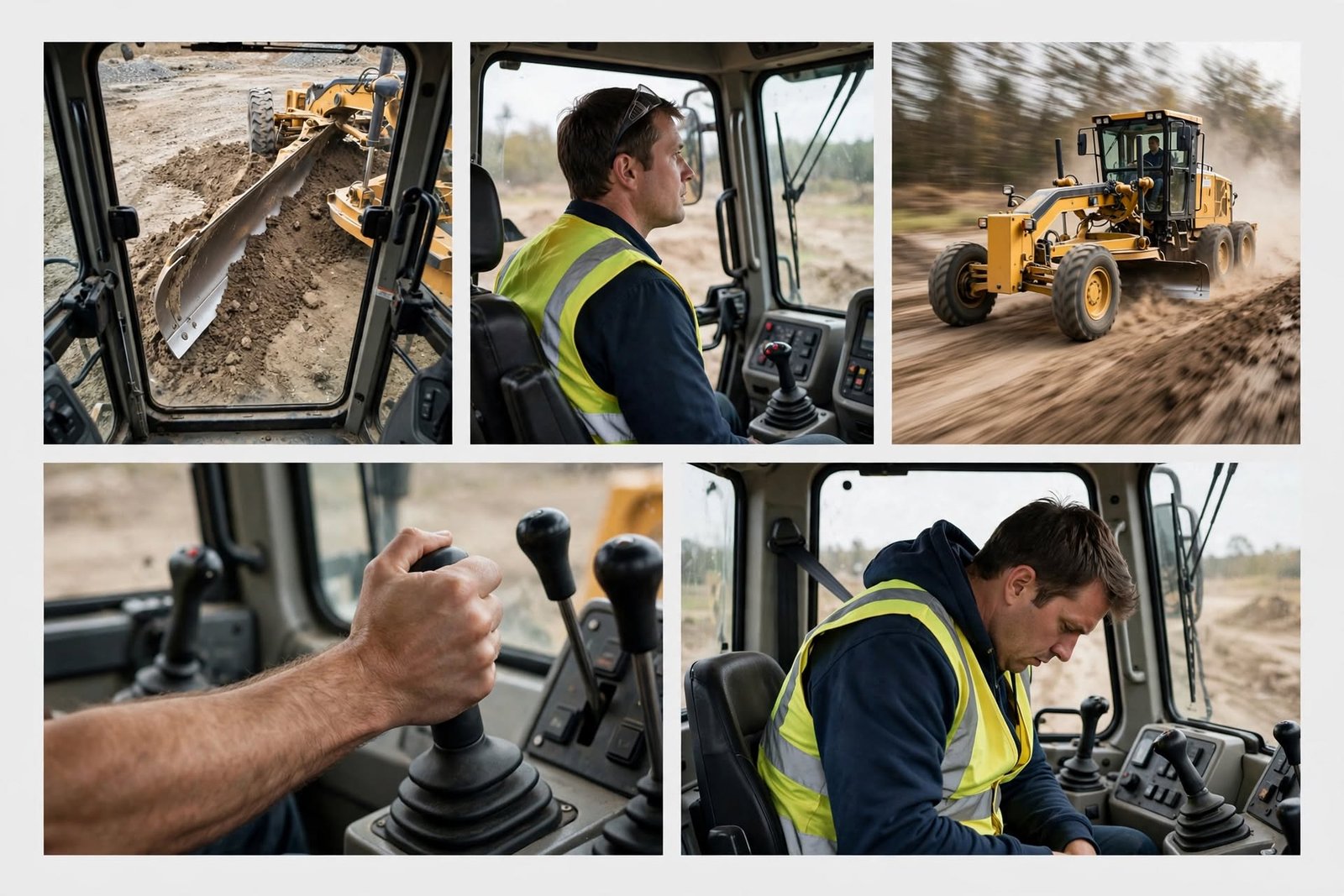
Motor Grader Operator Training starts with a simple question. Why does a perfectly maintained machine, often a new machine with fresh grease and a new cutting edge, produce terrible grades? Everything is ready. Yet the final surface shows waves. Bumps. Uneven patches. Water pooling where it should drain. The equipment performs flawlessly. The results disappoint completely. What went wrong? The operator. Plain and simple. Motor Grader Operator Training separates smooth roads from rough trails. It distinguishes professionals from amateurs. But most operators never receive proper Motor Grader Operator Training. They learn from watching others. They pick up bad habits that ruin grading accuracy completely.
Table of Contents
Relying Solely on Visual Reference Points
Every operator learns to pick a reference point. A tree. A stake. A previous windrow. Look at it. Grade toward it. Simple method. Deadly flaw. The problem? Visual reference points lie. Trees move with wind. Stakes get knocked over. Windrows change shape after rain. Operators fix their eyes on one spot and never adjust. The blade follows that fixed point. The grade drifts.
Proper Motor Grader Operator Training must teach dynamic referencing. Use multiple points. Check the laser receiver. Watch the slope indicator. Look at the blade position relative to the machine frame. Never trust one single reference.
Operators who rely on one visual point create crown errors. The center of the road ends up too high. Water runs off the sides and erodes the shoulders. Or the center sits too low. Water pools in the middle. Potholes form within weeks.
Professional Motor Grader Operator Training emphasizes triangulation. Three reference points minimum. The blade angle. The front wheel position. The rear tandem alignment. Constantly cross-checking. Constantly adjusting. Some experienced operators use a string line stretched across the job site. The string provides a true straight reference.
Over-Correcting the Blade During Passes
Small adjustments feel natural. The blade drifts slightly left. The operator turns the wheel a few degrees right. The blade drifts right. Another correction. Back and forth. Constant steering input. This habit produces a wavy surface. Every correction translates to the blade. The blade cuts deeper on the correction side. Shallower on the return. The finished surface looks like rolling hills.
Comprehensive Motor Grader Operator Training addresses over-correction directly. Smooth steering wins every time. Make small inputs gradually. Allow the machine to respond before making another change.
Operators often over-correct because they watch the blade too closely. Staring at the cutting edge creates paranoia. Every tiny movement seems catastrophic. The operator reacts immediately. Over-reaction follows. Better approach: Watch the horizon. Look ahead thirty to forty meters.
Advanced Motor Grader Operator Training includes practice sessions with blindfolds on the blade. Sounds crazy. Works brilliantly. Operators learn to feel the machine response through the seat and steering wheel. Visual input becomes confirmation rather than primary guidance.
Maintaining Consistent Ground Speed Regardless of Material
Full throttle. Top gear. Every pass. Same speed. Same aggression. Same RPM. Operators love speed. Speed feels productive. Speed covers ground quickly. Speed ruins accuracy. Different materials demand different speeds. Loose gravel needs slower passes. The blade bites too deep at high speed. Compacted clay requires moderate speed. Fast passes skip across the surface.
Effective Motor Grader Operator Training must emphasize variable speed control. Read the material first. Feel the resistance through the blade. Adjust throttle accordingly. Dry conditions generate dust. Dust reduces visibility. Visibility affects accuracy. Slowing down improves visibility and precision.
Wet conditions create suction. The blade sticks to the ground. Higher speeds cause the blade to release suddenly. Sudden release creates dips. Dips require rework.
Proper Motor Grader Operator Training includes speed drills. Operators run the same section at different speeds. They measure the finished surface elevation. They see the difference firsthand. That practical demonstration changes behavior faster than any classroom lecture.
Neglecting the Moldboard Tilt Function
The tilt cylinder sits right there. Operator’s fingertip controls it. Most never touch it. Moldboard tilt adjusts the blade angle relative to the machine frame. Proper tilt allows the blade to cut flat while the machine sits on uneven terrain. Without tilt, the blade follows the machine’s lean angle.
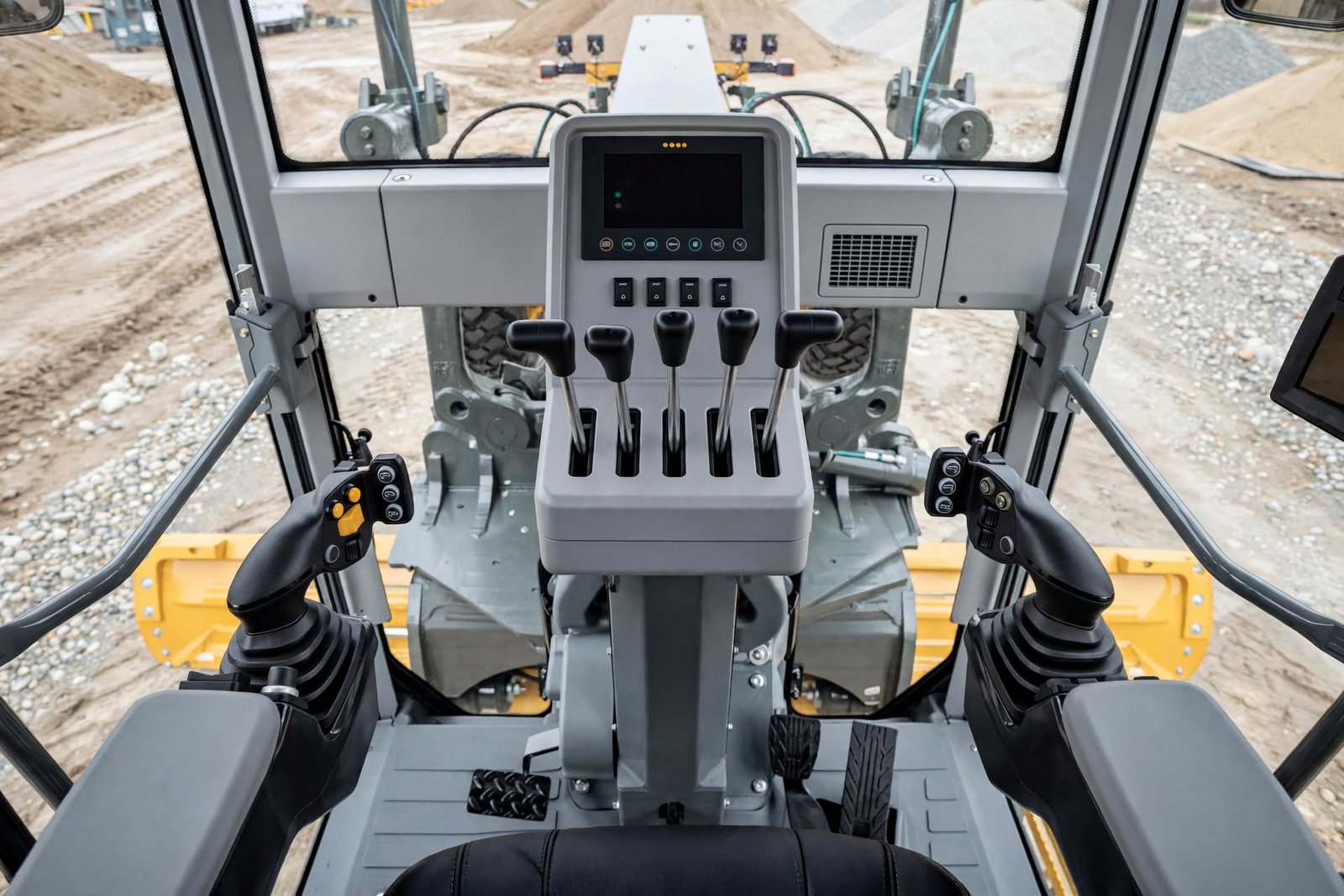
Quality Motor Grader Operator Training treats moldboard tilt as essential. Not optional. Essential. When grading roads, the crown requires specific tilt settings. The blade must tip slightly downward on the shoulder side. That tilt creates proper drainage. Water runs off the surface instead of pooling.
Operators who ignore tilt leave flat surfaces. Water stands on flat surfaces. Standing water damages the road base. Repairs cost time and money. All preventable with proper tilt usage taught during Motor Grader Operator Training.
Cross slopes demand tilt adjustments. The machine sits at an angle. The blade must compensate. Proper tilt keeps the cutting edge level with the desired grade plane.
Failing to Adjust for Blade Wear During the Shift
Blades wear. Every pass removes microscopic steel particles. Within hours, the cutting edge changes shape. The center wears differently than the ends. The operator notices nothing. That changing shape affects cutting depth. A worn center cuts shallower than the edges. The grade profile shifts throughout the day.
Ongoing Motor Grader Operator Training must include dynamic adjustment techniques. Operators need to compensate for wear in real-time. Raise the blade slightly as the edge wears. Adjust side-shift to use fresh sections.
Measuring blade wear during the shift prevents hidden errors. A simple steel ruler placed against the cutting edge reveals thickness differences. If the center measures thinner, side-shift the blade. Use the thicker edges for the next few passes.
Operators who ignore wear patterns produce inconsistent grades. Thorough Motor Grader Operator Training teaches weekly thickness logging. Operators record measurements at shift start and shift end. They see the wear progression.
The Financial Impact & Corrective Strategies
Poor habits cost money. Inaccurate grading requires rework. A single rework pass doubles the fuel consumption. Multiply by hundreds of passes per project. Fuel waste adds up to thousands annually.
Expert Motor Grader Operator Training breaks this cycle. Operators learn efficient techniques. They produce accurate grades on the first pass. Rework becomes rare.
One construction company documented the difference. Trained twenty operators in these five corrective techniques. Measured results over six months. Fuel savings of 12 percent. Rework reduction of 30 percent. Total annual savings exceeded $75,000.
Dedicated Motor Grader Operator Training programs incorporate corrective strategies. Classroom sessions explain the science. Field exercises demonstrate effectiveness. Operators see immediate improvement.
The Role of Machine Technology
Modern graders offer advanced technology. GPS. Auto-blade controls. Slope monitoring. Cross-slope sensors. None of these replace good habits. They augment them. Operators who rely solely on technology lose their manual skills. GPS fails. Sensors break. Batteries die.
Balanced Motor Grader Operator Training balances technology with manual proficiency. Operators learn both. They practice manual grading without assistance. They practice technology-assisted grading with the same fundamentals.
Conclusion
Five habits ruin grading accuracy. Visual reference reliance creates drifting grades. Over-correction produces wavy surfaces. Inconsistent speed damages material compaction. Tilt neglect prevents proper drainage. Blade wear ignorance causes inconsistent depths.
Complete Motor Grader Operator Training addresses every single habit. It replaces bad practices with proven techniques. It saves fuel. It reduces rework. It extends equipment life.
The training does not require expensive equipment. It requires commitment. Motor Grader Operator Training transforms average operators into skilled professionals. The difference shows immediately. The final grade speaks for itself. Smooth. Consistent. Properly drained.
Every fleet needs this training. Every operator deserves this training. The choice remains clear. Continue with bad habits or invest in proper training. Motor Grader Operator Training makes that choice easy. It provides the skills. It provides the confidence.
One Comment